Showing posts with label Doc Guidry. Show all posts

Saturday, December 5, 2020

Alex Broussard- "The Year 57"


Alex Broussard started his recording career with the start of Carol Rachou's La Louisianne Records in 1959. The second record he recorded was a song about one of the deadliest hurricanes to hit south Louisiana named Hurricane Audrey.


Raised in the Acadian area, Alex started playing a variety on instruments at a early age. Growing up he had a musical ear and played a variety of instruments. In 1959 he approached Carol Rachou about recording some songs. 

Carol owned a local stereo and record shop in downtown Lafayette called the Music Mart. He had been experimenting recording a few groups in the back of his store and released them on his Jazz at the Music Mart label. When Alex approached him about recording, he felt it was wrong to release them on this label; so he started La Louisianne Records.


Alex had been playing with his friend, Leroy "Happy Fats" LeBlanc, combining Cajun and country music. Together they played around southwest Louisiana. For the first session in 1959, Alex brought Happy Fats, Doc Guidry and Sleepy Hoffpauir to the recording session.


The second song they recorded was "The Year '57" (L’annee de cinquante sept). The song was about Hurricane Audrey which was the first storm of the 1957 hurricane season and it made landfall on June 27th. It was the deadliest hurricane to strike the United State since 1928. Hurricane Audrey's strong winds generated rough seas offshore Louisiana, with wave heights of 40–50 ft occurring in the Gulf of Mexico. It caused much damage to south Louisiana and the people there.


Dans l'année de cinquante-sept

Dans les mèches de la Louisiane

Droit dans la mer est venu un' lame

Qu'a couvert le sud de l'État

Tous les biens des habitants

Ont flotté sur l'eau salée

On va se rappeler de l'ouragan

Dedans l'année de cinquante-sep


Tous les bêtes de la Grande Chenière

Ont été noyées dedans les mèches

Les habitants de la Pacanière

Ont été ruinés par l'eau salée

Et les résidents des îles

Avec tout le courage du monde

Ont retourné dessus les îles

Dedans l'année de cinquante-sept


Tout le reste de la Louisiane

A prié pour le sud de l'État

La charité a été donnée

Pour les résidents des mèches

Et le monde de Cameron

Avec des larmes dedans les yeux

Ont retourné à Cameron

Dedans l'année de cinquante-sept


Aujourd'hui la Pacanière,

Les Chenières et Cameron

Est le paradis pour les chasseurs

Les pêcheurs et les piégeurs

Dans les mèches de la Louisiane

Les résidents sont tous contents

On va se rappeler de l'ouragan

Dedans l'année de cinquante-sept


Alex continued playing with Happy Fats during the early 1960's. Both Happy and Alex had radio shows on KSIG out of Crowley. They performed at many festivals during this time as well. Their main outlet was "The Marine' Show" which they hosted every Sunday morning on Channel 10, KLFY out of Lafayette.


Resources

http://www.lalouisiannerecords.com/lalouhis.htm

lyrics- cajunlyrics.com

John Broven- South to Louisiana

Jodie Broussard


Session info

V/g, Doc Guidry, Sleepy Hoffpauir (fdl), Leroy Leblanc (g) remainder unknown,

La Louisianne Studio, Lafayette LA: 1959

8020 The year ’57

(L’annee de cinquante sept) La Louisianne 8020

Friday, September 18, 2020

Vin Bruce- "Jole Blon"

                                               
Ervin "Vin" Bruce was born in Cut Off, Louisiana on April 25, 1932. His father, Levy played fiddle at local dances when Vin was growing up. Being from a musical family, Vin’s love for Cajun music grew and at the early age of 10, Vin learned how to play the guitar on his own. 


Although a shy country boy, Vin also began to sing. At 14 he began playing and singing in a local band, performing once a week on the radio in New Orleans. In 1946, Vin joined Dudley Bernard and “Southern Serenader's Band” and later went with Eugene Rodrigue and “The Louisiana Troubadours Band.”


On October 22, 1951, Bruce signed a recording contract with Columbia Records in Nashville, Tennessee. Just three years after the accordion made a comeback, Vin recorded such classics such as "Dans La Louisiane" and "Fille de la Ville", making him the first Cajun recording artist to work with Nashville musicians. Vin's Columbia sides brought that sound to the jukeboxes, airwaves and the 
Grand Ole Opry. Hank Williams was so endeared to Bruce's music that he invited him to play his public wedding ceremony at New Orleans' Municipal Auditorium. 

He recorded for the Columbia label from 1952 till 1954, and then in the mid-1950s; Vin's career took a downturn as Rock and Roll became popular. He played locally until he could no longer support himself by singing. To get by, he started to roughneck on offshore rigs.

In the early 1960's, Floyd Soileau was having success with his label Swallow Records. Many of Floyd's records were appearing on jukeboxes and playing a major role for independent record makers. 

Around this time, he opened Floyd's Record Shop in Ville Platte; bringing customers from the dance halls to his shop. The old Cajun legends came to Floyd one by one, hoping to achieve new life and endurance for their music. One of those artists was Vin Bruce.

It was 1961 when Bruce signed a recording contract with Swallow Records. By now, Floyd had developed his production company, Flat Town Music, and had been able to create a recording studio of his own in the back of his shop. It was for Swallow Records that Vin Bruce recorded his next hit single, “Jole Blon.” 

The original version of the song was recorded in 1929 by the Breaux Brothers called "Ma Blonde Est Partie". In 1936 the song appeared with the title "Jole Blonde" for the first time on two records, when the Hackberry Ramblers and Miller's Merrymakers recorded it in New Orleans. Then in 1946 the song gained success again from Harry Choates.

In the 1960’s Doc Guidry began playing and recording with Vin Bruce on Floyd Soileau’s Swallow Label. Their first record together was in 1961, and was widely successful. But together their recording of "Jole Blon" was a a hit all over again. The key ingredient to the record's success was Doc Guidry’s phenomenal fiddling. As for Vin, he continued recording for Swallow until the early 1970's.

Session info
Vin Bruce (V/g), Oran ‘Doc’ Guidry, Wilbert Robichaux (fdl), Harry Anselmi (st-g), Luke
Charpentier, Ebdon Barrios (g), D J Collins (b-g), Mack Cheraimie (d)
 1962
S-6356 Jole blon Swallow 129


Resources
https://www.flattownmusic.com/artist/vin-bruce/
Jessica Dauterive- Picturing the Cajun Revival: Swallow Records, Album Art, and Marketing
http://www.ponderosastomp.com/music_more.php/259/Vin+Bruce
Early Cajun Music Blog

Sunday, August 16, 2020

Happy Fats and Doc Guidry- Bayou Lafourche


After recording with Happy Fats and the Rayne Bo Ramblers in 1936, Doc Guidry had broke away to form The Sons of the Acadians with his brother Nason and cousin Ray. But 
Doc returned to Happy's band in 1947 when they recorded for J.D. Miller's Fais Do Do label. Together they were Miller's star act.


As the fifties rolled on, Happy and Doc's radio shows were listened to all through Acadia Parish. 
Happy, always the salesman, had sponsorship with Budweiser and Evangeline Maid Bread. They also were regular guest on the Louisiana Hayride in Shreveport. But with rock and roll dominating the  new sound, Happy and Doc's music seemed to belong to another era.

By 1956, times got hard for Cajun musicians. Happy had to find work outside of music and with the help of Jimmie Davis, he got a job with the Wildlife and Fisheries Department. Doc had better luck, playing fiddle with Vin Bruce's band.

After the impact of rock and roll, Happy discovered that the older audiences still wanted Cajun and Country music. He teamed up with Alex Broussard and formed the Bayou Buckaroos. Together they played the dancehalls of Southwest Louisiana and even had a radio show on KSIG. 

The La Louisianne label was founded in 1959 by Carol Rachou. Carol was a musician who played in dance bands in the early fifties. He got interested in Cajun French music and built a studio for his new label. Among their first to record for the label were Alex Broussard, Doc Guidry and Happy Fats.

Happy kept busy with his Marine'  television show on KLFY. The show featured a spicy mix of Cajun, Country, Folk and spiritual songs. Around this time Happy teamed up with Doc again to record for Carol's new label. In 1961 they recorded "Bayou Lafourche" a classic they had previously recorded for Miller's Fais Do Do label. Also of note is Doc Guidry's fiddle playing, which he had started to double track on recordings in Carol's studio.

Bonheur tous les matins
J'peux voir mon vieux papa
Partir à  la pêche dessus la mer.
C'est su' le Bayou Lafourche
Il vient toutes les dimanches
À l'église du bon dieu pour prier.

Y'en a pas qu'est si riche.
Y'en a pas qu'est si pauvre.
Juste les bons Acadiens, p'us pour envie.
Et c'est là  j'sus parti
Pour la balance d'ma vie
Sur le côté du beau Bayou Lafourche

The mid sixties found Happy recording again for Miller for a series of political records. In the late 70's he recorded for Swallow records; he always seemed eager to entertain. He had been a major Cajun personality since the 1930's and remained loyal to the Cajun-country music he performed. 

J.D. Miller had this to say about Happy:
  "I've got so much respect for Happy Fats and other's like him, they just went on as if nothing happened. He kept on playing his country music and making real Cajun and country records."

Resources:
John Broven-South To Louisiana
lyrics: cajunlyrics.com

Session info:

HAPPY FATS AND DOC GUIDRY
V-1/g, Doc Guidry (v-2/fdl) Jimmy Gardner or Jack LeBlanc (g), st-g, g, b, acdn-2
La Louisianne Studio, Lafayette LA: c1961
LL 8023-1 Bayou Lafourche-1 La Louisianne 8023,
LL103
LL 8023-2 Allons a Lafayette-2 La Lou 8023, LL103

Tuesday, August 11, 2020

Aldus Roger- O.S.T. Special

                                       
In 1957 Floyd Soileau quit working for the radio station after noticing that Cajun record releases were getting limited. While at the radio station, he had seen ads from Don Pierce of Starday Records advertising to press records. He collaborated with Ed Manuel to put out one record; but after its release, Manuel lost interest. So Floyd decided to go venture out on his own.

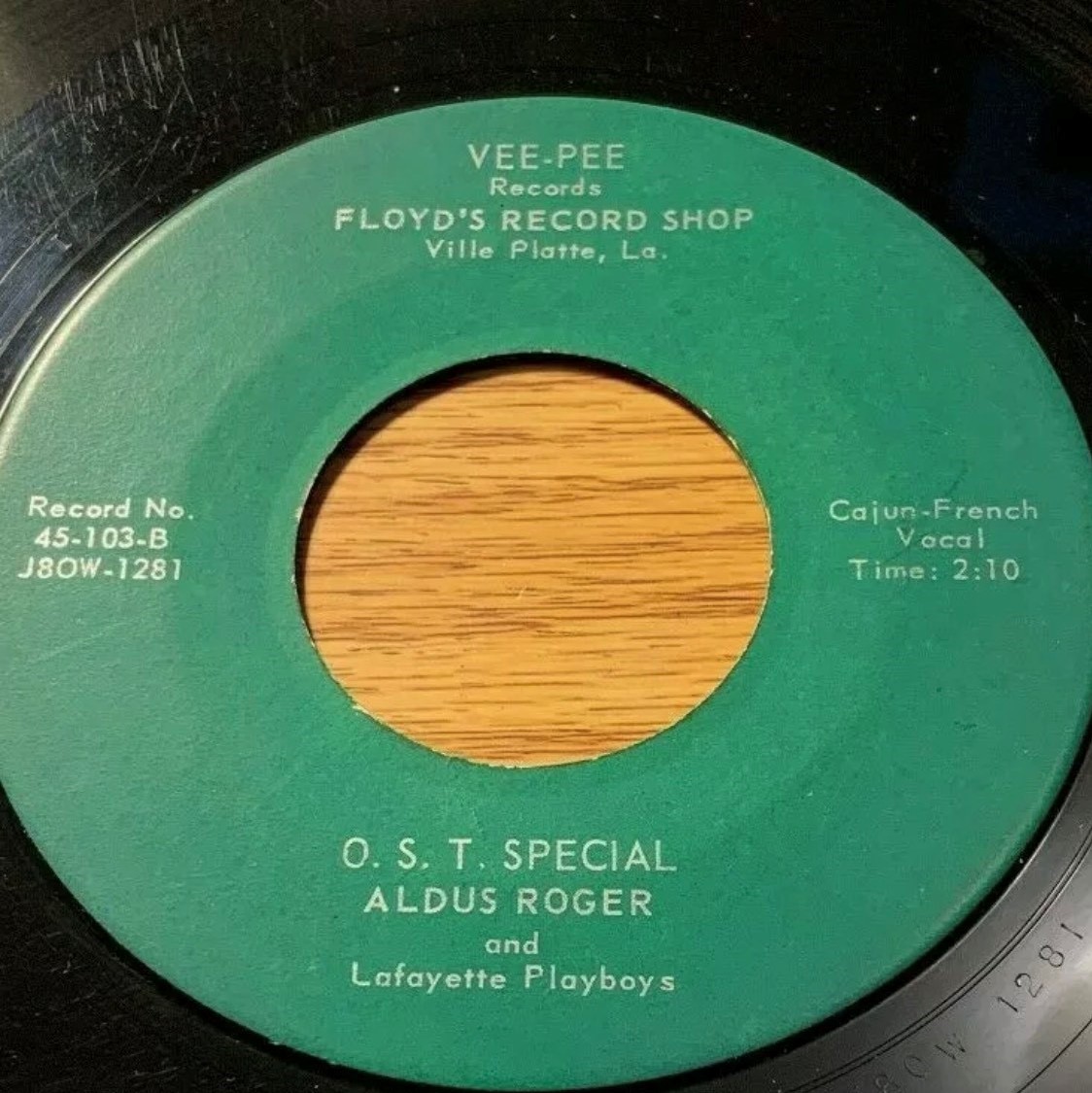
He changed the name to Vee-Pee Records after the town of Ville Plate. By this time, Floyd had made some good connections in the record business and the word was out that a new record company had opened up in Ville Platte. He bought 2 songs from Lawrence Walker for 60 dollars and released them on Vee Pee's first release. For that record he only pressed seven hundred 45's and 300 78's. Soon other artists were knocking at the door.


Aldus Roger and the Lafayette Playboys had recorded previously for J.D. Miller's Feature label in the mid fifties. But when labels such as Miller's and Khoury's slowing their Cajun recording down, artists like Aldus were looking for other labels to release their music. Floyd's label was a relief to artist like Aldus as it gave them a renewed output for their music.

Following Lawrence's example, Aldus went to Floyd to record and put out a record of him and his band. While Floyd didn't have a studio yet, he had to use Miller's studio in Crowley for some of his early releases. It was in 1958 that Aldus recorded "O.S.T Special" at Modern Sound Studio for Vee Pee 103. Floyd had it shipped to Nashville and RCA pressed it with a unique green label.

Aldus was known for having a tight band and this recording finds the band playing in high gear. Doc Guidry joined the band during this time and this recording marks his first record with Aldus. Phillip Alleman played his first dance when he was 11 with Aldus; replacing his brother, Clarence, on guitar and started a 25 year career with Aldus. Fernest “Man” Abshire joined the band around this time; he played with Aldus until his death. Johnny Credeur played with Aldus from 1958 to 1964, joining Belton Richard's group afterwards. Tunice "T Man" played with Aldus  for a couple of years, sadly passing away at age 29. 

O.S.T is in reference to the O.S.T dance hall in Rayne, La. The name is shortened for the Old Spanish Trail, named after a colonial Spanish Highway that connected San Diego, Ca. to St Augustine, Fla. The old route is now mostly made up of Highway 90 that passes thru Crowley and Rayne.

Musician Michael Dupuy says about the record:

"The unique and odd thing about that record is the fact that no other instrument takes a lead. It is strictly accordion with a strong rhythm guitar that echoes a bass at times. Also, there’s no drums being played. I am pretty sure it’s a cabasa."


But with this record, Aldus started a long reign in popularity and this was his most productive era. He would continue his career on a popular television show on KLFY for 15 years. He would go on to record for J.D. Miller again but recording for most of the 1960's at La Louisianne Records. As for Floyd, he would soon discontinue the Vee Pee label and would branch off into two labels; Jin and Swallow.


Resources:
Broven: South To Louisiana
Early Cajun Music blog
Michael Dupuy
Johnnie Allen- Memories
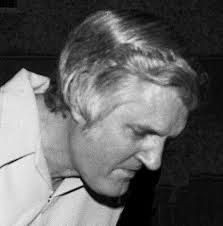
Picture of Aldus from the Michael Dupuy collection.

Session info:
Acdn with possibly Oran ‘Doc Guidry (fdl), Phillip Alleman (st-g), Johnny Credeur
(g), Tunice Abshire (b-g), Fernest ‘Man’ Abshire (v/d)
Modern Sound Studio, Crowley LA: 1958
VP 103A (J8OW1280) Midway waltz
 (La valse a Alida) Vee Pee 103,
Jin 108, Swallow 110
3003, LP6003
Ace(E) CDCHD743
VP 103B (J8OW 1281)O.S.T. (Cajun) special Vee-Pee 103, Jin 108,
Swallow 110, 3003,
LP6001 LP6007,
Ace(E) CDCHD 743

Tuesday, June 2, 2020

Lawrence Walker- "Chere Alice"

Lawrence Walker and his brother first recorded for Brunswick in 1929. After the depression, they recorded again for Bluebird in 1935. It would be 15 years before he recorded again, this time for the Khoury's label. After a string of recordings on the label, he recorded for the Swallow label and by the 1960's he moved to La Louisianne Records in Lafayette.

Carol Rachou founded La Louisianne Records in 1959. His first release was by Alex Broussard but in the following years, such greats as Lawrence, Aldus Roger and Happy Fats were recording for his label. Lawrence would finish out his recording career with the label, cutting 12 songs in total on 45 rpm.


Around Acadia Parish the story of Alice, Adam and his horse Henri was well known. Angelas Lejeune had previously used the story for his song "La Valse A Tidom Hanks". The story involves Adam "Tee Dom" Hanks and Alice Royer. The two were lovers but Alice's father didn't approve of the two being together. Adam loved to ride his horse, Henri, while drinking whiskey from a jug and this was enough to make Alice's father not like him. The two seperated and eventually married others. But Adam's love for Alice never died. He composed a song about his love for Alice called "La Valse a Tee Dom" and would sing the song on his accordion with tears streaming down his face at house dances.

As for Lawrence, Adam told him the lyrics to the song at a dance one night near Bosco. He used the melody from his "Country Waltz" on Khoury to transform into his song "Chere Alice" recorded in 1962 on La Louisianne Records featuring the great fiddling of Doc Guidry. It would be one of the last singles he ever released.

Lawrence and his Wandering Aces kept kept the Cajun dance hall fire going in the late 1950's and 1960's. But soon Rock music influence would soon dominate the scene. Lawrence's steel guitar player was Johnny Allan and would use Lawrence's band to play as the Krazy Kats. Lawrence soon got aggravated at the situation and abandoned playing. He passed away in 1968 at age 60.


Resources
Early Cajun Music Blog
Johnnie Allan: Memories

Monday, May 4, 2020

Aldus Roger -"Oson Two Step"


Kate Webster remembered Miller's producing:
"When you go into J.D. Miller's studio you have to cut perfect records. He hears the least mistake, he seems to have microphones in his ears. Yes, he was a good producer."

J.D. Miller started his Cajun Classics label in 1959 starting with a release by Nathan Abshire. The Cajun Classics label offered many Cajun sounds, from the throwback sounds of Moise Robin to the cajun country of Jimmie Choates. Jay Miller was willing to record almost any kind of material as long as it had commercial potential. The more mainstream Cajun performances were popular. Terry Clement's "Les Filles Mexie" and Floyd Leblanc's "Roseland Two Step" were some of the best. Among some of the great recording artists on the Cajun Classics label was Aldus Roger.

Aldus Roger and the Lafayette Playboys set the standard for modern tradional Cajun  bands. He formed the band in the 1940's and always featured the best musicians. Aldus's playing was unlike other accordionists, his playing was loud and full force. He and his band had a devoted following among dancers and musicians.

Aldus was not new to the J.D. Miller studio. He had first recorded for Miller on his Feature label in 1954 and stopped in 1955. When Miller started recording country and blues, Aldus got lost in the shuffle. In 1958 he recorded again for Floyd Soileau's Vee Pee label and again in 1959 for Goldband. In 1960 returned to recording for Miller and his Cajun Classics label. His first release was "Oson Two Step" backed by "Family Waltz". Aldus was always known for having a tight band and this recording is no exception. Doc Guidry plays fiddle on the track with Phillip Alleman on steel guitar, Johnny Credeur on guitar, T-Man Abshire on bass and Fernest Abshire on drums.


The song is similar to Lawrence Walker's "Osson Two Step" which was recorded in 1956 and Pee Wee Broussard's "Creole Stomp" recorded in 1953. As for Aldus, he led his group for over twenty years. He brought Cajun music to a wider audience on his weekly television program on Channel 10 in Lafayette. They had a full hour on Saturdays to play. They weren't paid for the program, instead they used the show to advertise where they were playing that night. He would continue to play and record into the 1980's.


Resources
Early Cajun Music blog
John Broven- South To Louisiana

Tuesday, February 25, 2020

Alex Broussard- Le Sud De La Louisiane

Alex Broussard was born August 19, 1926 in Maurice, La. Raised in the Acadian area, he started playing young.  Alex had a musical ear, playing banjo,dobro and upright bass. He was known as the "Barefoot Cajun", opting to sing and play barefoot. 

In the late 50's, Alex went to Carol Rachou to talk to him about recording.  Alex wanted to record a song called "Le Sud De La Louisiane" about the Cajun's exile to south Louisiana. Carol had built a studio out of his parents old grocery store and with Alex's first record, La Louisianne Records was born. The record was recorded in 1959 in Lafayette at Carol's first studio. "Le Sud De La Louisiane" was backed with "The Year 57" but some of the earlier versions featured a flip side by Ed Juneau. Alex made several recordings with Carol in the late 50's and early 60's. 


From 1959 till 1962 Alex recorded with his old friend Leroy "Happy Fats" LeBlanc on La Louisianne Records. Afterwards he joined The Bayou Buckeroo's with Happy Fats. With this group they discovered that older audiences still wanted Cajun and Country music. Together Happy and Alex played the dancehalls and clubs of Southwest, La. Both Happy and Alex had radio shows on KSIG out of Crowley. They performed at many festivals during this time as well. Their main outlet was "The Marine' Show which they hosted every Sunday morning on Channel 10, KLFY out of Lafayette.

"Le Sud De La Louisiane" was written by Alex for the Breaux Bridge Centennial. The Breaux Bridge Centennial evolved into what is today know as The Breaux Bridge Crawfish Festival. The song describes the coming of the Acadians to south Louisiana with its frogs, alligators, crawfish and above all its unbelievable beauty. On this 1959 classic Alex is joined by Doc Guidry, Sleepy Hoffpauir and Leroy "Happy Fats" Leblanc.

On a flotté sur la grande mer
On a marché dedans le sable
On a passé dans les montagnes
Dans les cailloux de la Virginie,
On a trouvé les cocodris 
Les cocodris de la Louisiane
On donnerait pas nos cocodris
Pour tout le reste du pays.

Ici dans le sud de la Louisiane

Les poissons flottent dans le bayou Tèche
Les canards volent dedans les mèches
Les ouaouarons dans les platains,
Les écrevisses dans les clos de riz
Les écureuils dans les grands bois
On a trouvé notre paradis
Dedans le sud de la Louisiane.

Les petites Cadjines de la Louisiane

Les meilleures cuiseuses du pays,
Les sauces piquantes, les écrevisses,
Les patates douces dans la cheminée,
Ça chante les chansons de la Louisiane
Ça bat le linge dans le bayou Tèche,
On a trouvé les petites Cadjines
Dedans le sud de la Louisiane.

Les vieux Cadjins de la Louisiane

Les meilleurs citoyens du monde,
Ça brûle du bois pour la cheminée
Ça boit du moonshine tout l'hiver,
Ça danse les polkas du vieux temps,
Les mazurkas, les valses aussi,
On a trouvé le paradis
Dedans le sud de la Louisiane. 

In 1980, KADN-TV out of Lafayette started their program "Laissez Le Bon Temps Rouler" which Alex hosted. It was around this time Alex built Alex Broussard's Ranch, a dancehall in Judice. The dance hall was a favorite of many Cajun and country musicians, including Alex's friend, George Jones.

Alex was a pilot, a farmer and beloved member of Lafayete Parish. He was a frequent guest on The Grand Ol' Opry and hosted many Cajun music shows.


Alex Broussard-"Le Sud De La Louisiane"
La Louisianne 8016

Resources
John Broven-South To Louisiana
with thanks to Jodie Broussard

Thursday, February 20, 2020

Aldus Roger and The Lafayette Playboys- New Mardi Gras Dance


During Mardi Gras in the rural areas of south Louisiana, communities will dance around to the playing of a Cajun accordion, known as the Mardi Gras dance.


Aldus Roger was born in Carencro in 1915. Growing up his father didn't want him playing the accordion. But Aldus would borrow one and sneak out to the barn and play. By his mid-teens he was playing in public. During the 1940's he formed his group, The Lafayette Playboys. Aldus began to make his mark with his band in the 1950's during the accordion revival.

Aldus looked to Lawrence Walker as a inspiration growning up. He remembers watching Lawrence play and imitating his style. In the Lafayette Playboys, he surrounded himself with professional musicians who were well rehearsed. By the 1950's television stations in south Louisiana provided a few shows aimed at local audiences. By June 1955, KLFY offered viewers a half hour Cajun music program of Aldus and his band.


Aldus and his band were recording for J.D. Miller's Feature label at this time. From the late 50's to the 1960's he recorded for Feature, Swallow and Goldband. In 1960 he returned to recording for Miller on his Cajun Classics label. It was here he recorded another version of his Feature Classic, "Mardi Gras Dance". Miller had previously recorded great Cajun Music on his Fais Do Do and Feature label. Around 1955 he had focused on mainly country and blues. With the recent success of Floyd Soileau's Swallow label, Miller started recording Cajun music again on his new 45 labels.

In 1960 he recorded "New Mardi Gras Dance" for Miller's Cajun Classics. The song is a quick tempo, full sounding instrumental with solos throughout the song. Unlike the early traditional chant, the "dance" would have a bluesy chord progression with room for different musicians to take the lead. Aldus's version of the deeply traditional Mardi Gras Dance took it a step further,being pepped up to a frenzy by rock and roll drumming.

It was recorded in Crowley, Louisiana in 1960 at Miller's Modern Sound Studio. Joining in on this version, it featured the great fiddle work of Doc Guidry. Rounding out the band were Phillip Alleman, Johnny Credeur,Tunice Abshire and Fernest Abshire.

Throughout the 1960's he continued performing on KLFY and recording for La Louisianne. His last released record was for Lanor in 1981.


Resources
Early Cajun Music blog
Lyle Ferbrache- Accadian All Star Special

Saturday, February 8, 2020

Lawrence Walker and His Wandering Aces- Reno Walz (La Valse De Reno)


Lawrence Walker was born September 1, 1907 in Duson, La. At age 13 he began playing in a band with his father and brother. He and his brother first recorded with Brunswick in 1929 and then again in 1935 with Bluebird Records.

He returned to farming after the Bluebird recordings and later on, back to recording and playing after World War II. Lawrence and his Wandering Aces played the clubs and had a string of recordings from 1950-1962. By the 1950's Lawrence was known for developing a new style in Cajun music. He was known to be a perfectionist; he demanded higher standards of his band.

He first recorded "Reno Waltz" for George Khoury's label. Reno was named after the Reno Dance Hall located between the towns of Kaplan and Gueydan. It is based on a older tune, "La Valse de Grand Chenier". Lawrence had gotten into a argument with Reno's owner, "Dado" Seaux. In order to make amends and to keep performing there, he named the song after the Club. Lawrence's popularity in his live performances earned him the title "King of The Dancehalls". He was a big leader in the accordion revival in Cajun music. Johnnie Allan remembers:

            " Lawrence was a big factor in French music. His songs were all the sad, melodic type songs, he was a very good  accordion player, very well known in the area. I played steel guitar for him for 6 years and he crowds were tremendous almost everywhere we played."

From 1950 thru 1955 Lawrence and his Wondering Aces recorded for Khoury's. By the late 1950's, Khoury lost interest in recording Cajun music, Lawrence aproached Floyd Soileau to release his recordings. Two records were released on Swallow in 1956 and Lawrence didn't have a record come out until 1961. 

Carol Rachou built a studio in Lafayette out of his parent's old grocery store and started his label, La Louisianne. From 1961 thru 1962, Lawrence released seven titles on La Louisianne Records. Along with one of the first Cajun rock and roll numbers sung in English; "Allons Rock and Roll", he also recut his Khoury classic, "Reno Waltz". On this version, Lawrence used different lyrics than he used on the original and replaced the steel guitar with fiddling by "Doc" Guidry.

Oui, la place que moi, je voudrais mourir                      
c’est dans les bras de mon petit bébé.                          
Demander pardon pour ça j’ai fait,                             
là je serais d’accord de m’en aller dans Grand Gueydan.         

Quand je vas mourir, j’aimerais que tu viennes.                 
Fermer mes yeux, petit bébé, pour moi je m’en vas.              
Pour moi, je m’en vas dans la terre pour toujours.              
Comme tu connais, ça fait du mal juste à y jongler.
             
T’es si petite, si mignonne, si canaille, petit bébé,         
Mais je t’aime quand même.                                      
Moi je vois p’us dans le monde quoi moi je vas faire.           
J’ai p’us personne dedans le pays qui veut m’aimer.            

Yes, the place where I’d like to die
is in the arms of my little baby.
To ask forgiveness for what I’ve done,
then, I’d agree to go away to Big Gueydan.

When I die, I’d like for you to come.
Close my eyes, little baby, so that I can go away,
so that I can be buried in the ground forever.

As you know, it hurts just to think about it.

You’re so little, so cute, so mischievous, little baby,
but I love you anyway.
I don’t see anything left for me to do on this Earth.
I don’t have anyone left in this land who wants to love me.

After these recordings, Swamp Pop and Rock and Roll took over music like Lawrence's. Johnny Allan had joined the Wandering Aces a few years prior. After a couple years playing, he left the group due to his career taking off. Johnny convinced members of the Wandering Aces to join his band called the Krazy Kats. With this band set up they played a couple shows until Lawrence found out about the other group. By this time he had enough.

He stopped recording after these recordings and in 1968, he passed due to a heart attack. His legacy remains overlooked. His playing was bluesy and full of Cajun soul. His songs have been a influence on the next generation of Cajun musicians, but Lawrence has been mainly overshadowed by Nathan and Iry, sadly.


                                        Lawrence Walker and His Wandering Aces
                                        Reno Walz (La Valse De Reno)
                                               LL 8030
                                         Recorded 1961-1962
                                           La Louisianne Studio, Lafayette, La,


                                                          Resources
                                                            Early Cajun Music Blog
                                                          John Broven-South To Louisiana
                                                          translation- Erin S.