On December 9, 1929, Amede Ardoin and his partner, Dennis McGee, recorded their first recordings in New Orleans. The very first song they recorded was a number called "Taunt Aline". Ardoin's popularity took off after their first recordings and the music influenced generations to come. One of those influenced was a young boy named Iry LeJeune.
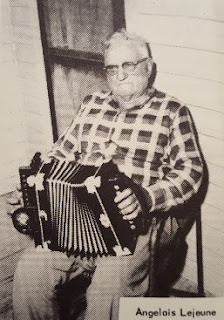
Iry grew up fascinated with the music he heard around him. His great uncle, Angelas Lejeune, was one of the top accordion players in the area. Like McGee and Ardoin, Angelas had recorded in the 1920's as well, recording for the Brunswick label. At the sessions, Angelas would record "La Valse de Church Point" and the first recording of "Perrodin Two Step". Playing with him on the sessions were Dennis McGee and a Church Point fiddler named Ernest Fruge.
Iry would visit Angelas who lived just a mile away and it was there Iry learned how to play the accordion. Angelas also introduced the young Iry to the sounds of other accordion players. At his home, Angelas had a phonograph player and played Iry 78's of other players such as Amede Ardoin, Joe Falcon and Amade Breaux. Iry would sit and listen and study these records, retaining every note in his head. Surely it was there that Iry first heard Ardoin and McGee playing "Taunt Aline".
By 1954, Iry had recorded and released several records. The band kept busy with playing clubs across the area as well. They would play the Blue Goose in Eunice and at the Shamrock Club. Milton Vanicor recalls Nathan Abshire stopping by the Shamrock and playing with Iry and the band one night. Iry would also play at the Red Barn Club in Texas and the China Ball Club in Bristol. Luderin Darbone recalls Iry stopping by the Silver Star to listen to the Hackberry Ramblers from time to time.
In 1952, Eddie had recorded Iry at his home on his reel to reel recorder. He returned in early 1954 to record another session for upcoming releases. The recordings were made over several dates and included Iry, Wilson Granger and Alfred Cormier. For one of the songs they recorded, Iry drew inspiration from Ardoin's "Taunt Aline" and used it for his song, "Come and Get Me".
Oh ye yaille, chere tit monde, catin,
Mets-toi voir bien jongler
Ca t'as fait.
C'est pas la peine
Que tu le lamentes.
Viens donc me chercher, ye yaille.
Ton papa va venir.
Je peux pas aller t'apres.
Oh, tite fille, c'est tous les soirs,
Je me couche.
J'embrasse mon oreiller
Des fois en jonglant,
Faire des accroires que ca serait toi
Qui serais la, ye yaille.
Mais, tout je peux voir,
Tu t'en reviendras pas
Me revoir.
Iry's version of the song tells about a young man lamenting that his "catin" won't come back since her father brought her back home. He sings of the young man kissing his pillow and believing in is her beside him. The song was also known as "Viens Me Chercher".
Iry's 1954 recordings would be his last for Eddie Shuler. His recordings for opened the doors for many other artists to record. Eddie was known to often say that Iry never made a record that wasn't a hit and by the mid 1970's, Iry Lejeune's records were still the most popular of the Goldband artists. As for the melody of "Taunt Aline" and "Come and Get Me", it would go on to be used by The Balfa Brothers for their 1974 recording "J'Sus Orphelin".
Resources
Ron Yule- Wailin The Blues Cajun Style
Wade Falcon- Early Cajun Music blog
Session info
V/acdn, Wilson Granger (fdl), Alfred Cormier or Eddie Shuler (g)
By 1954, Iry LeJeune was no stranger to recording. His fascination with commercial recordings stimulated his desire to record. Unable to work on the family farm due to his poor vision, Iry spent time playing devoloping his style by playing along with his 78 rpm records on his phonograph.
A good example of Iry's connection to commercial recorded music is "Love Bridge Waltz". Iry used the melody of a 1929 recording from Delin Guillory and Lewis Lafleur song called "Alone at Home" for his song. While the Guillory and Lafleur song was recorded in 1929, it wouldn't be until 1940 until it was released. The delay of this record release; in conjunction with the Lee Sonnier's Acadian All Stars post war releases, sparked the accordion revival that thrived in Cajun Country following World War II. Iry first recorded with the Oklahoma Tornadoes, after Sonnier's Acadian All Stars groundbreaking collaboration with Happy Fats. Afterwards, Iry was constantly asking Eddie Shuler to record him. Iry recorded again with two sessions at KPLC in Lake Charles. After these sessions, Eddie Shuler bought a reel to reel recorder and began recording Iry at his house. Eddie explains: "I bought a tape recorder, and it cost $237, which was a lot of money in those days. We would put the machine on the kitchen table and cut these things..." It was at the 2nd session at Iry's house that he recorded "Duraldo Waltz". The song was brought to the session by fiddler Wilson Granger. He had the song in his head from hearing his father play it around the house. Wilson whistled the tune to Iry and he made up some lyrics on the spot. Duralde is a small community outside of Eunice where Iry often played at. There were two recordings of the song released, with two slightly different lyrics. But on the song Iry put down the accordion and let Wilson's fiddle playing shine. Iry often would call out to Wilson on the recordings; saying "Eh Pill" for Wilson's solo. Iry would call him this because Wilson had severe headaches was constantly taking Aspirin.
The song was recorded at Iry's home in the kitchen with the reel to reel on the kitchen table. Those present at the session were Iry, Wilson Granger and Alfred Cormier. Iry had a family dog named Rain, that was there at the session as well. During the recording, someone came to the door and Rain barked at them. On this version of the recording, Rain's bark was left on the recording; the other version Shuler released had different lyrics and was missing Rain's bark. Over time people would approach Shuler and ask him about the dog on the recording. It seems odd to why Shuler would release two different versions. Eddie was also known to turn on the recorder and record the band while they warming up. He would release these recordings as well as recordings he spliced together. This record continues in Eddie's tradition of assuming song writing credits for songs he clearly did not write. Iry would continue playing and recording until his death. He got tired of Eddie's antics and bought himself a recorder to record and release his material. By mid 1955 he was playing around Lake Charles when Wilson quit him to pursue other interests. Iry turned to his old friend, J.B. Fuselier to help him out on the fiddle. One night they were coming from a dance in Eunice and the car had a flat. A incoming car struck them and killed Iry and seriously injuring J.B.
Resources
Ron Brown- Iry Lejeune:Wailing the Blues Cajun Style
Early Cajun Music Blog
Ryan Brasseaux- Cajun Breakdown