Showing posts with label Evangeline Playboys. Show all posts

Monday, November 16, 2020

Austin Pitre and the Evangeline Playboys- "Flum de Faire"


After Austin Pitre passed away in 1981, a box was found in his house of well used 78 rpm records by artists such as Amede Ardoin and Douglas Bellard. His love of the older music was evident from his music he chose to record through the years.


Austin was born in Ville Platte, surrounded by house parties. All of the area's musicians had a great effect on Austin growing up. His family were hard working sharecroppers making little money. His father was a fiddle player and his mother played the accordion. Soon Austin's father gave him a accordion in hopes that he would learn to play and join him at the local house parties.


Austin soon married and balanced the responsibility of working in the fields or as a mechanic all day then playing at dances at night. World War II came and Austin stayed home as he was the only son left to support his family. During this time the accordion popularity went down, Austin formed a string band to play for out of state soldiers. 


He first recorded for J.D. Miller with his group, The Evangeline Playboys. In the following years, Austin and the Playboys played many of the large dancehalls of the time. In 1957 he was recorded by Ed Manuel and the release was released on Big Mamou Records, which would be one of Floyd Soileau's first labels.
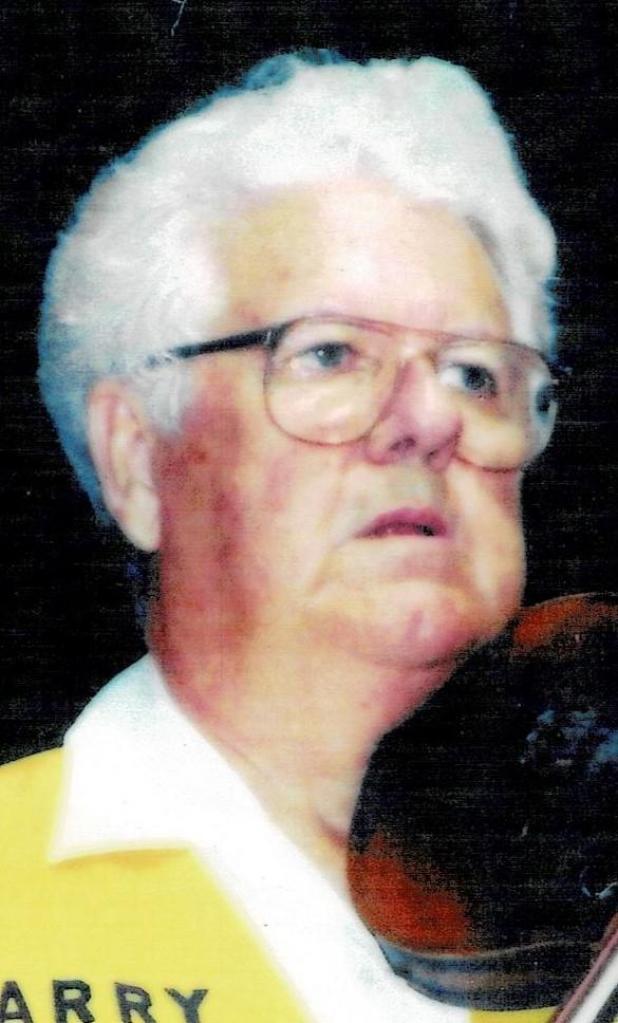


Harry LaFleur recalls working with Austin in the early 1950's. He would go watch Austin at the Dixie Club in Eunice and like his playing. At the time both Harry and Austin were working at Bordelon's Ford Garage. Austin asked Harry if he and his band would back him on a record.


Austin's first release in 1959 was on Floyd's Swallow Records. It was a double sided affair, paying tribute to two artists Austin listened to on those 78 rpm records. The A side was a cover of a Amede Ardoin song, but the B side became a hit.

The B side is a cover of a pre war Cajun song recorded by Douglas Bellard. Douglas was a black fiddler from Bellaire Cove, not far from Ville Platte. In 1929, he recorded "Mon Camon La Case Que Je Suis Cordane"; which was also known as "The Flames of Hell". The song is derived from another classic Creole song called "Adieu Rosa".

Austin and his new band recorded their version of the Bellard classic but used the title it was known for; "Flum De Faire" or Flames of Hell. The song is a Cajun classic that Austin made his own with the desperate plea plea to a loved one to "pray for me, save my soul, I am condemned to the flames of hell.."


Hey, maman

T'as tout l'temps dit

J'aurais pleurer

J'vas regret j'sus gone

C'est une belle tite fille

Elle etait si fine

J'sus parti la avec

Pour un bon temp

Quand moi, j'ai vu

J'sus condamné

J'sus condamné

Les flammes d'Enfer

Priez pour moi

Sauvez mon âme

Sauvez mon âme

Les flammes d'Enfer


Hey, maman

Priez pour moi

J'sus condamné

Les flammes d'Enfer

J'ai ité a la porte

Disait 'Tite Tante


Qui c'est qu'est la?

---C'est ton neveu

---Qui c'est tu veux??

Priez pour moi

J'sus condamné


Austin's session was recorded in Floyd's first studio next to the Platte Theatre. Floyd recalls the session:

"I used a delayed echo system that I  devised from using a voice of music recorder and that little space between the recorder head and playback head gave a reverb sound where you could split the mic and feed it back in to get as much echo as you wanted from it. I didn't like the sound at first and held back on releasing it. I finally released it and  it sold well on the jukeboxes and became a hit. My first million seller."


This first record was a hit for Austin and the Evangeline Playboys. Austin recorded extensively for Swallow Records between 1959 and 1971 recording many classic songs. He is largely responsible for keeping some of the old classics alive, many of which he had on the old 78 rpm records. His music is a prime example of the powerful dancehall sound of the time.


Session info

AND EVANGELINE PLAYBOYS

V-2/acdn, Harry LaFleur (fdl), J Audrey ‘Cabrie’ Menier (v-1/st-g), Dickey Gill (g),

Eston Bellow (d)

Swallow Studio, Ville Platte LA: October 1959

S-6312 Flum de faire (Flumes dans faires)

 (Flames of hell)-2 Sw 106


Resources

Conversations with Floyd Soileau

Wade Falcon- Early Cajun Music Blog

Broven- South to Louisiana

Ann Savoy- Liner notes to Arhoolie CD 452

lyrics- cajunlyrics.com


Tuesday, May 19, 2020

Austin Pitre -"Dont Shake My Tree"

In 1959 Austin Pitre had one of the first biggest hits on Swallow records with "Flum De Faire". He continued on with a series of recordings on Floyd Soileau's Swallow Records. Austin and the Evangeline Playboys made the rounds of the large dancehall circuit of the 50's and 60's. The band played eight dances a week at the Silver Star, Evangeline Club, Hick's Wagon Wheel, Jungle Lounge and on and on.


Austin grew up hearing his parents play music after working in the field all day. On his 6th birthday his father gave him a accordion and by the time he was 11 years old he was playing music with his father. At age 22 he formed his own band, the Evangeline Playboys. His flamboyant playing style and energetic vocals set him apart from other Cajun musicians of the era. Austin and his band became one of the most sought after Cajun bands in the area.


The "don't shake my tree" verse has a long history in popular music, It appears as the chorus of a unpublished song composed by Irving Berlin in 1914. Bessie Smith's "Mamma's Got the Blues" includes the line as well. William Harris's "Hot Time Blues" recorded in 1928 used the phrase as did many popular blues songs. When the Beatles covered Carl Perkins's "Matchbox" they included the "don't shake my tree" verse. What version Austin drew inspiration for his cover is unknown.

Austin and the Evangeline Playboys recorded their version in 1963. It was backed with "Jungle Club Waltz" on Swallow 10146. Playing on the session with Austin was Harry LaFleur on fiddle, J Audrey "Cabrie" Menier on steel, Dickey Gill on guitar and  Eston Bellow on drums. Austin and his band would continue recording  for Swallow until 1971.


Resources
John Broven -South To Louisiana
Wade Falcon

Sunday, March 1, 2020

Austin Pitre and the Evangeline Playboys- Chinaball Waltz

Austin Pitre was born February 23, 1918 in Ville Platte, Louisiana. Growing up his parents were sharecroppers and would always sing in the field and in the evenings play music on the porch. His father, Joseph, played fiddle, but he presented Austin a accordion on his 6th birthday in hopes of his young son playing with him at fais do do's. By age 11 he was playing with his father as a regular musician.

By the age of 22 he formed the Evangeline Playboys. His flamboyant playing style and energetic vocals set him apart from other musicians at the time. Austin was known for playing the accordion behind his back, over his head and between his legs. 

 In 1950 he had the distinction of being the first Cajun artist to record for J.D. Miller's Feature label out of Crowley. Around this time, Austin had a radio show every Sunday afternoon on KSLO in Opelousas. During the day, he had a steady job as a mechanic. But during the evenings he played locals clubs and dance halls.

His wife, Dorothy recalls,

"Austin was very popular and drew big crowds in a fifty mile radius of our home,
playing six or seven nights a week, plus he worked his day job as a mechanic."

He recorded with Feature records until 1956. At this time labels like Khoury's and Goldband were focused on music outside of Cajun music. Floyd Soileau started recording Cajun music in 1957 with two brief labels; Vee Pee and Big Mamou. Jukebox operator Ed Manuel had recorded Austin and his band at a party and their recording of "Manuel Bar Waltz" would be Floyd Soileau's entry into the music buisness.

It was in 1960 that Austin Pitre and the Evangeline Playboys recorded "Chinaball Blues". The song was actually a melody by Doc Guidry called "Le Nuevo Te Maurice". Austin's "Chinaball Waltz" also sounds similar to his previous Feature recording of "Chatatinia Waltz". 

Austin had a long engagement at the Chinaball Club which was located in Bristol, between Opelousas and Rayne.  The Chinaball Ball Club was originally built in 1949 and owned by Alex Leger. At the time, the Chinaball Club wasn't doing too good. The owner, in a last desperate effort to save his club, begged Austin to play his club. At this time, Austin and his band were drawing capacity crowds wherever they played. The owner told Austin that he didn't come play there that the club would be forced to close up. So Austin and his band packed up and headed to Bristol and brought the crowds with them. A lot of artists around this time recorded songs with the clubs name in it. Sometimes the intent was for more work at the club and sometimes just to celebrate and market the club.


"Viens nous joindre au Chinaball,
c’est pour avoir un bon temps avec votre famille
T’allais voir les mazurkas.
C’est cela, oui qui va vous traiter bien
La plus belle place dedans le pays,
oui, asteur, oui, que tu vas au Chinaball.
Viens nous joindre là-bas au Chinaball.
C’est la place moi je vas quand ça fait noir
Oui, cela ayoù tout le monde
peut se joindre, oui, pour avoir de l’agrément.
Va les joindre ,
Oui, là-bas, la meilleure place dedans le pays."


"Come join us at the Chinaball
to have a good time with your family.
You can see the mazurkas.
It’s the place where they’ll treat you right.
It’s the most beautiful place in the world,
yes, now that you come to the Chinaball.
Come join us out there at the Chinaball.
It’s the place that I go when it’s dark out.
Yes, the one where everybody
can meet up, yes, to have fun.
Go join them,
Yes, out there, the best place in the world."

n 1959 Soileau had changed the name of his label to Swallow and would continue to record and release Austin's music. His recording of "Flumes Dans Faire (Flames of Hell) was the first big hit for the label. He recorded for the label from the late 50's until the 1970's. In 1973 Austin was invited to perform in Washington, D.C. to perform at the Smithsonian Festival. He passed away April 8, 1981.


Resources
John Broven- South to Louisiana
Early Cajun Music Blog
lyrics by Erin S.