Showing posts with label Goldband Records. Show all posts

Sunday, January 9, 2022

Leroy Broussard- "Lemonade Song"


The history of Cajun music is filled with songs that have been passed down, borrowed from and rearranged. "Lemonade Song" is among those songs and is filled with interesting history.

The song's beginnings start with a recording by Columbus Fruge in 1929 called "Point Clear Blues". Jimmie Choates transformed the song into "Petite Negres" in 1948 along with Blackie Dartez. The song was recorded again in 1957 by a musician from Rayne who named it as "Lemonade Song".


Leroy Broussard was born November 8, 1921 to parents who played the accordion. Like many families, Leroy's family made the move from South Louisiana to Texas following work. Growing up, Leroy listened to Nathan Abshire, Lawrence Walker and J.B. Fuselier. When Leroy was twelve years old he moved back to Louisiana and for a while even played with Nathan Abshire.


He moved back to Texas in 1948 and started playing with Joe Cormier's band; playing every day except Monday's. Leroy recalls:


"They'd come from Houston, they'd come from all over, and they went for the French music. They had people who had come to that bandstand and said they had never heard it, but they liked it."


Leroy and his band, The Happy-Go Luckies, became a big hit at the B.O. Sparkle Club around this time. He continued to play in Texas for nine years, then he quit. He came back to Louisiana and worked in the oilfield for some time, then he started working for the city of Lafayette and began playing music again. He would eventually return to Texas and run the Sparkle Paradise for a while.


After 1955, Eddie Shuler was focused on recording more Cajun musicians. He had had some success with Sidney Brown's accordion based recordings and was open to record Leroy when he came to his studio and recorded "Lemonade Song".


Moi j'aime cousin et moi j'aime cousine mais j'aime mieux la cuisinière.  

Samedi, ce soir, moi courir au bal, je m'ai saoulé comme un gros cochon. 

Dimanche matin, il est tout manière malade,

Passez lui le verre à limonade.


L'hiver arrive, l'hiver arrive, ton p'tit nég a pas de couverte,

Samedi, ce soir, l'ai courir au bal, je m'ai saoulé comme un gros cochon,

Dimanche matin, j'ai tout manière malade, 

Passez moi le verre à limonade.


Moi j'aime cousin et moi j'aime cousine mais j'aime mieux la cuisinière.  


Samedi, ce soir, moi courir au bal, moi saoulé comme un gros cochon. 

Dimanche matin, il est tout manière malade,

Passez moi le verre à limonade.


Moi je bois du vin et moi je mange des dattes, et tout ça, ça me coute pas rien,

Samedi, ce soir, l'ai courir au bal, je m'ai saoulé comme un gros cochon,

Dimanche matin, j'ai tout manière malade, 

Passez moi le verre de Kary-On.


His band at this time consisted of himself on accordion, Freeman Hanks on fiddle, Robert Thibodeaux on drums and Charlie Babineaux on guitar. Leroy and his band would record only four songs at Goldband studio, he would go on to record for La Louisianne and also Kajun Records. He would continue to claim he wrote "Lemonade Song". One night Leroy met legendary accordionist, Moise Robin at a bar and struck up a conversation about songs. Leroy insisted he wrote the song and Moise reminded him that Columbus Fruge wrote it first. The argument became heated and Moise told Leroy:


"I told him, "You're wrong!"  He got angry.  I said, "Okay, but someday I might find 'Boy' Fruge's record, and even if I have to go to your home, I'll find out where you live and I will show you that it's not you who made that record."


Resources:

Ann Savoy- Cajun Music Volume 2

Wade Falcon- Early Cajun Music blog


Session info:

LE ROY BROUSSARD & HIS FRENCH ACCORDION BAND (1048) 

V/acdn, Freeman Hanks (fdl), Charlie Babineaux (g), Robert Thibodeaux (d), 

Goldband Studio, Lake Charles LA; 1957

-A Lemonade song Goldband 1048


Saturday, December 11, 2021

Iry Lejeune- "Come And Get Me"


On December 9, 1929, Amede Ardoin and his partner, Dennis McGee, recorded their first recordings in New Orleans. The very first song they recorded was a number called "Taunt Aline". Ardoin's popularity took off after their first recordings and the music influenced generations to come. One of those influenced was a young boy named Iry LeJeune.


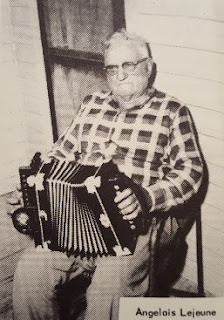
Iry grew up fascinated with the music he heard around him. His great uncle, Angelas Lejeune, was one of the top accordion players in the area. Like McGee and Ardoin, Angelas had recorded in the 1920's as well, recording for the Brunswick label. At the sessions, Angelas would record "La Valse de Church Point" and the first recording of "Perrodin Two Step". Playing with him on the sessions were Dennis McGee and a Church Point fiddler named Ernest Fruge.


Iry would visit Angelas who lived just a mile away and it was there Iry learned how to play the accordion. Angelas also introduced the young Iry to the sounds of other accordion players. At his home, Angelas had a phonograph player and played Iry 78's of other players such as Amede Ardoin, Joe Falcon and Amade Breaux. Iry would sit and listen and study these records, retaining every note in his head. Surely it was there that Iry first heard Ardoin and McGee playing "Taunt Aline".


By 1954, Iry had recorded and released several records. The band kept busy with playing clubs across the area as well. They would play the Blue Goose in Eunice and at the Shamrock Club. Milton Vanicor recalls Nathan Abshire stopping by the Shamrock and playing with Iry and the band one night. Iry would also play at the Red Barn Club in Texas and the China Ball Club in Bristol. Luderin Darbone recalls Iry stopping by the Silver Star to listen to the Hackberry Ramblers from time to time.


In 1952, Eddie had recorded Iry at his home on his reel to reel recorder. He returned in early 1954 to record another session for upcoming releases. The recordings were made over several dates and included Iry, Wilson Granger and Alfred Cormier. For one of the songs they recorded, Iry drew inspiration from Ardoin's "Taunt Aline" and used it for his song, "Come and Get Me".


Oh ye yaille, chere tit monde, catin,

Mets-toi voir bien jongler

Ca t'as fait.

C'est pas la peine

Que tu le lamentes.

Viens donc me chercher, ye yaille.

Ton papa va venir.

Je peux pas aller t'apres.


Oh, tite fille, c'est tous les soirs,

Je me couche.

J'embrasse mon oreiller

Des fois en jonglant,

Faire des accroires que ca serait toi

Qui serais la, ye yaille.

Mais, tout je peux voir,

Tu t'en reviendras pas

Me revoir.


Iry's version of the song tells about a young man lamenting that his "catin" won't come back since her father brought her back home. He sings of the young man kissing his pillow and believing in is her beside him. The song was also known as "Viens Me Chercher".


Iry's 1954 recordings would be his last for Eddie Shuler. His recordings for opened the doors for many other artists to record. Eddie was known to often say that Iry never made a record that wasn't a hit and by the mid 1970's, Iry Lejeune's records were still the most popular of the Goldband artists. As for the melody of "Taunt Aline" and "Come and Get Me", it would go on to be used by The Balfa Brothers for their 1974 recording "J'Sus Orphelin".


Resources

Ron Yule- Wailin The Blues Cajun Style

Wade Falcon- Early Cajun Music blog


Session info


V/acdn, Wilson Granger (fdl), Alfred Cormier or Eddie Shuler (g)

Lejeune’s house, Ardoin Cove, Lacassine LA: 1954 


Come and get me Gb1057

Sunday, September 5, 2021

Lionel Cormier and the Sundown Playboys- "Sundown Waltz".


Inspired by the response to Iry Lejeune's records after his death, the 1950's found Eddie Shuler becoming more involved in recording Cajun Music. During these years he recorded Sidney Brown, J.B. Fuselier and Aldus Roger. Another great group he recorded was the Sundown Playboys.


The Sundown Playboys first started recording in 1951. Though they have gone though different members; The Sundown Playboys are the musical journey of the Lionel Cormier family.


Lionel Cormier learned the accordion from his father at a early age. By the time he 12, he was playing the accordion at house dances across Acadia Parish. In 1935 he settled in Elton playing a few house dances following World War II. He would begin playing with Percy Fuselier in 1947 and form the Sundown Playboys.


The group started out with Lionel on the accordion, Wallace "Red" Toucet on fiddle, Howard Mier on guitar, and Lesa on drums. Lesa was replaced on drums by Clifton "Tan" Benoit on drums when he served in the miltary from 1951-1953.


The group first recorded in 1951 on J.D. Miller's Feature label. Lionel was successful in landing radio airplay including places like KPLC in Lake Charles, KSUL in Sulphur and KJEF in Jennings. Their second recording was in 1956 at Eddie's Goldband studio. By 1955 Eddie Shuler was no longer depending on local radio stations to record his artists at. Eddie recalls:


"I built the studio in 1955, my father in law designed it. He was a carpenter, so him and his brother built the studio according to my specifications."


For their second recording the lineup for the Sundown Playboys had changed. Lesa Cormier ws back on drums after his military service. And fiddler Wallace Touchet was replaced with the great Dewey Balfa. Dewey recorded with the Sundown Playboys for their first two sessions for Goldband, but by the third session in 1959, Wallace Touchet was back on fiddle.


The mid 1950's found Dewey to be a in demand session player. It was then he started recording with Nathan Abshire, a recording career that lasted until Nathan's passing. He also recorded with Elise Deshotel during this time on the Khoury's label.


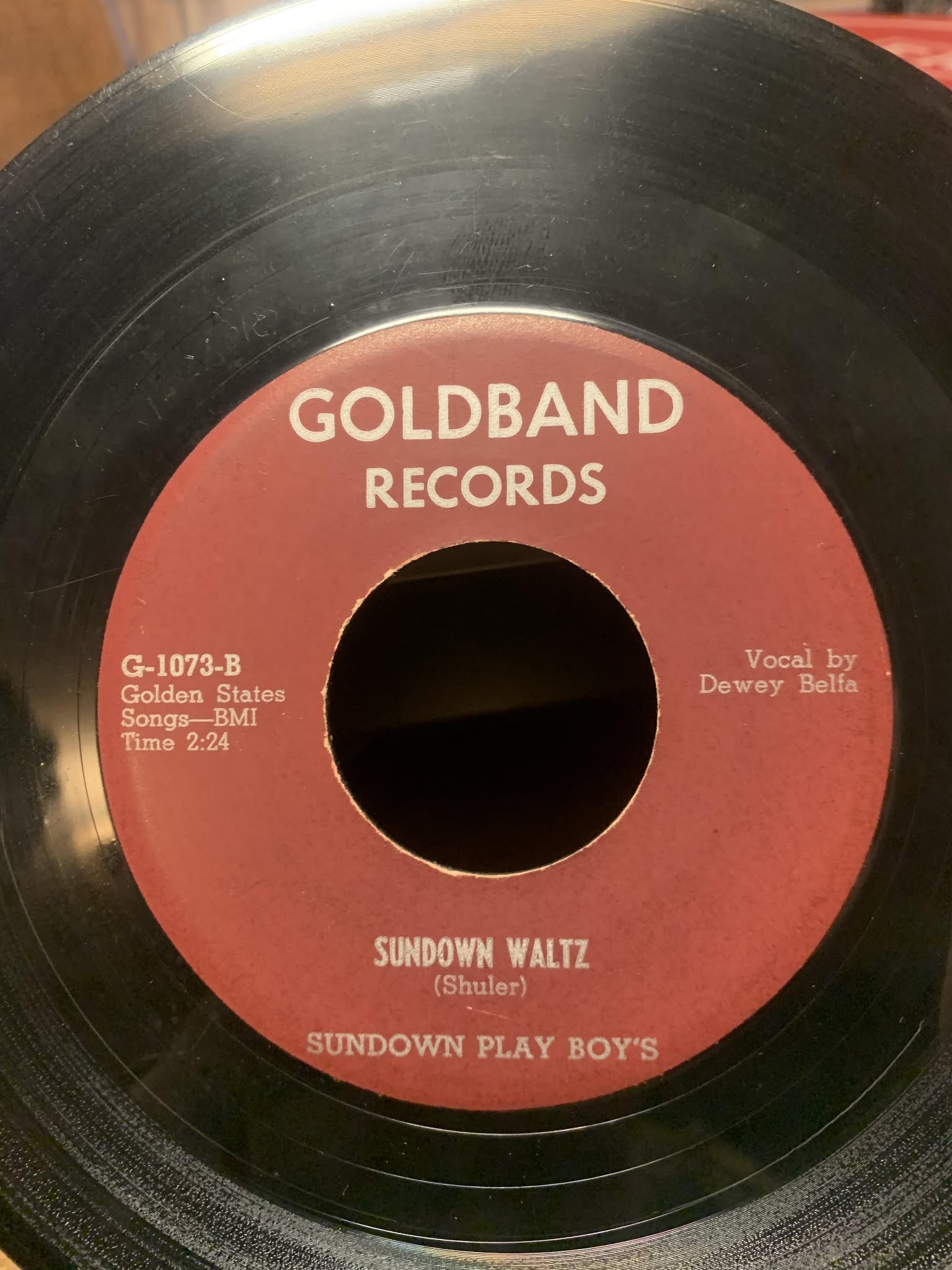
 Lionel and the Sundown Playboys recorded for Shuler's Goldband label from 1956-1959. "Sundown Waltz" was off the group's second recording session for the label in 1957. Lionel let Dewey handle the vocals on the track.


After their recordings for Goldband the group would return to recording for J.D. Miller on his Cajun Classics in 1960. But gone was Howard Mier and replaced with Lawrence "Blackie" Fruge. As for Lionel he would make one more record with the group in 1969 on the same label.


Lake Charles had started Cajun Days in 1967 and by 1971, it was hosted at the Bamboo Club on Highway 14 with Lionel and the Sundown Playboys as headliners. After finishing the song "Church Point Two-Step", Cormier died of a heart attack unexpectedly, while taking a break as KJEF radio announcer Jerry Dugas was making announcements between songs. 


The following Saturday night the band had a booking, so 15 year old Pat Savant joined to help. With Pat joining the group, the band headed in a new direction.


Session info:


LIONEL CORMIER AND THE SUNDOWN BOYS (1054, 1073)


Lionel Cormier (acdn), Dewey Balfa (v/fdl), Howard Mire (g), Larry Miller (st-g), 

Lesa Cormier (d)

Goldband Studio, Lake Charles, La; 1957

-A River two step Goldband 1073, Goldband(E) GCL110 

-B Sundown waltz Goldband 1073


Resources

John Broven- South to Louisiana

Wade Falcon- Early Cajun Music blog

http://wired-for-sound.blogspot.com/2011_11_24_archive.html

Ron Yule- Cajun Dancehall Heyday

Sunday, March 7, 2021

J.B. Fuselier- "Think of Me"


Jean Baptiste "J.B." Fuselier was born April 17, 1901 near Oberlin. He began playing the fiddle at five years of age. He claims at that age he was too small to pick it up, so he had to place it on the bed to play. He also learned the accordion when he was young.


By the mid 1930's, J.B. joined Miller's Merrymakers and recorded at four different sessions between 1936 and 1938. When Miller left the group, JB took over the group. His music never gained the popularity of artists such as Leo Soileau and Luderin Darbone.


He had a specific sound of traditional Cajun fiddle playing and emotional singing that was well received. Many musicians were influenced by his playing. His band was also well known for their radio broadcasts during this time. With musicians such as Preston Manuel and Atlas Fruge in the band, they would work live radio shows during the day and play dances at night.


After this J.B. didn't record, but he continued playing with his string band at house parties. It was at these fais do do's that J.B. would bring a accordion and play in between breaks on the fiddle. Musicians like Maurice Barzas credit him to bringing back the accordion's popularity.


By 1945, Fuselier was running a restaurant in Eunice and playing dances every night. Iry LeJeune was a frequent visitor there and befriended J.B., soon he was playing music with him.


In 1955, Fuselier and Iry were involved in a accident which left J.B. severely injured and claimed LeJeune's life.


J.B. stayed in the hospital for over a year, but was soon playing again. Around 1962, he ended up recording for Eddie Shuler's Goldband Records out of Lake Charles. Shuler had found success with Cajun music and had recorded artists like Iry LeJeune and Sidney Brown. 


For his first recording on Goldband, he reached back to one of the songs he had recorded in 1938 called "Ponce A Moi" and retitled it "Think Of Me". The songs describes a abandoned lover urging the other to think of them even though they have parted ways.


J.B. would record again for Goldband in 1966. From those sessions, recordings have surfaced of him and James Stewart where J.B. plays the fiddle again. Fuselier would continue to play until his death in 1976. Many musicians have covered his songs and are now part of standard Cajun repertoire.


Session info:

J B FUSILIER AND HIS ACCORDION (1138)

V/acdn, remainder unknown

Goldband Studio, Lake Charles LA; c1962

-1 (9484) Think of me Goldband 1138


Resources: 

Ron Yule- Wailing the Blues

Wade Falcon- Early Cajun Music Blog

Monday, October 12, 2020

Boozoo Chavis- "Hamburgers and Popcorn"


 "Boozoo" Chavis was born Wilson Chavis on October 23, 1930 in the Doghill section of Lake Charles. He was playing accordion and harmonica at the age of nine years old. He was influenced by several local Creole accordion players and soon he was playing at various social functions by his teenage years.


He acquired the nickname "Boozoo" in his childhood, although the origin of the nickname is unknown. When asked by a reporter about his nickname, Chavis replied "Man, I hate that question". His mother opened a dance club in 1944, where ‘Boozoo’ could sit in with Maurice Chenier and his sons Clifton and Cleveland, picking up techniques from the early zydeco masters.


After Iry LeJeune's death, Sidney Brown was Eddie Shuler's star accordionist. Sidney heard Boozoo playing and recommended him to Eddie. At this time Boozoo played by himself, keeping time by stomping his foot on a Coke box.


Eddie recalls:

"Sidney heard this boy out in the country that had a pretty good song. He brought Boozoo by and we recorded "Paper in My Shoe". 


Eddie first wanted Sidney Brown and his band to back Boozoo on his recordings, but Sidney told him he couldn't play that kind of music. Sidney told Eddie that it wasn't Cajun music, that they called it Zydeco. Eddie hired a local band to back Boozoo on the session.


The first recordings in 1954 did so well that soon, Imperial Records leased the master for national distribution. It wasn't long after that Imperial wanted more songs to release. But Boozoo wouldn't make any more records because he hadn't got paid from the previous sessions. The record sold well all over the country, but when Boozoo saw the paltry royalty check it brought him, he thought it was so disgraceful.


Eddie finally got Boozoo 700 dollars for the recordings and he cut two more songs to be released. Sadly, Imperial wasn't interested in the new material and momentum was lost. As for Boozoo, he went back to the horses and would come by the studio to record something every once in a while.


It wouldn't be until 1960 that Boozoo would record again. He released "Hamburgers and Popcorn" on Eddie's Goldband label. The song started out as a instrumental and Little Brother Griffen's vocal was added later.


 Boozoo spent the next thirty years training racehorses, before he signed a contract with the Maison de Soul label in 1984. With a sandpaper voice and a hypnotic single-note riffs, Boozoo took zydeco back to an earlier style compared to the current output of the time. Boozoo recruited his sons Charles on ‘frottoir’ and Rellis on drums into his backing band The Majic Sounds.


Session info 

Goldband 1161

Hamburgers and Popcorn

Vocals- Little Brother


Resources

https://www.allaboutbluesmusic.com/boozoo-chavis/

Liner ntoes to The Lake Charles Atom Bomb

https://en.wikipedia.org/wiki/Boozoo_Chavis

Early Cajun Music Blog


Wednesday, September 2, 2020

Pee Wee Kershaw- Your So Fine


Nelson “Pee Wee” Kershaw was born on July 20, 1930 in the bayou's of Lake Arthur, Louisiana. He lived on a houseboat with his father and mother, Jack and Rita Kershaw and his brothers, Edward, Doug, and Rusty 

At the age of 13, Pee Wee’s father passed away, leaving the responsibility of supporting his mother and younger brother’s, Doug and Rusty, on his small shoulders. Fortunately, his musical talents were fully developed to meet the task.


He played at local clubs and Fa-Do-Do's until he formed his first band, Pee Wee and His Continentals, which included his two younger brothers, Rusty and Doug. Pee Wee played the drums and accordion, while his brother Doug played fiddle and Rusty played the guitar.


As their popularity grew, Doug began writing songs which were recorded through J.D. Miller under the name Rusty and Doug Kershaw. Pee Wee began managing his brothers and making bookings while playing in their band. 


Success brought them to The Louisiana Hayride in Shreveport, LA. Pee Wee became the drummer for Jim Reeves, a well-known Country star at the Grand Ole Opry after his brothers went into the army. 

In 1961, he recorded for Eddie Shuler's Goldband label out of Lake Charles. Joining him on the recording is his brothers, Rusty and Doug. Together they recorded "Your So Fine" and "That's How It's Been" for Goldband 1118. It would be his sole recording for the label. 

Pee Wee recorded several songs, “Cajun Queen”, “Jole Blonde” and played the accordion on Rusty and Doug Kershaw’s recording of “The Cajun Stripper”.


PEE WEE KERSHAW
Nelson Kershaw (v/acdn), Doug Kershaw (fdl), Rusty Kershaw (g), st-g, d
Goldband Studio, Lake Charles LA; 1961
-1 That’s how it’s been Goldband 1118
-2 You’re so fine Goldband 1118

Resources
John Broven-South To Louisiana
with thanks to Wade Falcon

Sunday, August 2, 2020

Hobo Bertrand and His French Accordion- Starvation Waltz

                                              
Oscar "Coteaux" Bertrand was born in Elton in 1911 and played country dances in the 1930's with Percy Fuselier and friends. Oscar was known to sit in with numerous bands following World War II, but did not play in a formal band.


In the late 1950's he recorded for Eddie Shuler's Goldband record label. He recorded "Starvation Waltz" and "Tite Villain Manniere" in Lake Charles at Goldband studio. The 45 rpm would be his only release on the label.


Theres lyrics to the song in Yé Yaille Chère by Raymond K Francois. Oscar's version is similar but has some different lyrics.

Tu m’as pris de la maison
Pour m’amener dans les grand bois
Pour combattre la misère 
Et pleurer de la crève de faim. 

J’ai passé en avant 
La porte de ton papa
Ton papa était assis dessous un arbre 
Après chacoter de la misère 
Et pleurer de la crève de faim. 

J’ai passé en avant
La porte de ta maman 
Ta maman était assis sur la galerie 
Après radoter de la misère 
Et pleurer de la crève de faim.

The melody is similar to "La Valse du Cimetière" and was later recorded as "Les Blues de Creve de Faim" by BeauSoleil.

In the early 1970's the Longshoremen Playboys were formed consisting of Oscar Bertrand and Emory LaPoint. They played a few local dances and released one record.

No one really knows where he got the nickname "Hobo". One can speculate that it was a name Eddie Shuler came up with for Oscar's recording on Goldband. It could be a sound alike for his nickname "Coteaux".
                                     
HOBO BERTRAND
AND HIS FRENCH ACCORDION (1063, 1163)
Oscar Bertrand (v/acdn) with possibly Emory LaPoint (g), remainder unknown
Goldband Studio, Lake Charles LA; c1957
-1 (SO 1114) Starvation waltz Goldband 1063,
1163
CDCHM519
-2 (SO 1115) Tite villain Manniere Gb 1063. 1163

Resources
Ron Yule-Cajun Dancehall Heyday
thanks to Smith Stickney

Monday, July 27, 2020

Sidney Brown-Pestauche Ah Tante Nana


Born in Church Point in 1906, Sidney Brown was raised in Point Noir until the family moved to the Richie Community. His uncle had a accordion and Sidney learned to play on it. He steal the accordion and sit in the cotton rows and play. He was self taught on the instrument and by the age of 13, he was playing house dances in the area.

As a young man he worked as a roughneck in the oilfields, eventually moving from the Ville Platte to Lake Charles. He found a job a job in woodworking where he could use his skills. At this point Sidney had already begun developing his skills toward making and repairing accordions while he held down his job at the Lake Charles Sash and Door Company.

After World War II Sidney formed the Traveler Playboys. By 1948, Sidney Brown and the Traveler Playboys were playing on KPLC on a weekly thirty minute program. In addition to shows with his band; from 1952 to 1959, Sidney performed with the Musical 4+1 and the Hillbilly Ramblers.

Around 1955, Sidney and the Travelers began recording for Eddie Shuler's Goldband label. At this point, Eddie had been inspired by the response to Iry LeJeune's records selling so well to record more Cajun music. After the first record, the band's record sales increased and so did offers of personal appearances.

In 1958, Sidney and his band recorded "Pestauche Ah Tante Nana", also known as the Peanut Song. The song went on to become the third best selling record in the history of Cajun music. Originally titled "La Pistache a Trois Nana" or even "La Pistache a Quatre Nanan", it seems to stem from a older tune. It seems the change of wording was no accident; it was a example of Sidney's sense of humor.

S’en aller chez Nonc’ 'Tave,
Ça plante la belle récolte,
Du coton et du maïs,
Et la pistache à Tante Nana.

C’est ça qu’est si bon,
Grillé à dans l’bas du "stove",
Le temps mouillasseux,
La pistache à Tante Nana.

Ils est belle et si mignonne,
Tu dis on l'aime autant, 
Ses ça j'ai t'en aller, 
Et la pistache à Tante Nana.

S’en aller chez Nonc’ Charles,
Ça plante la belle récolte
Du coton et du maïs,
Et la pistache à Tante Nana.

While the song itself is subject to different interpretation; it didn't affect the song's popularity. The song was released in 1958 and Sidney and his band would go on to record many more sides for Goldband until 1960. Besides the many clubs they played, they also appeared on KPLC radio.

Another interesting bit about the record is that Shuler released two versions of the song. There are two released versions of Goldband 1061. The first featured "Noir Chaussettes Two Step" with "Pestauche Ah Tante Nana" was released in 1958. 


Shuler released the same numbered record again in the late 1960's! The later version featured "Chico Two Step" and a overdubbed version of "Pestauche Ah Tante Nana". The overdubbed version featured  Hugh Johnson on fiddle, Mervin Faul on steel guitar, Darrell Higginbotham on guitar and Albert Miller on drums.

Around 1960, Sidney lost his eye sight in one eye due to diabetes and in 1963 he was forced to abandon performing due to a heart condition. He spent the remainder of his years building and repairing accordions, producing many which are still in use today.


Resources
Early Cajun Music Blog
Ron Yule-Cajun Dancehall Heyday

Release info

HIS FRENCH ACCORDION & TRAVELLER PLAYBOYS (1061)
Acdn, Vinus Lejeune (v/fdl),Wallace Ogea (g),Tilford McClelland (st-g), Bill Matte
(d)
Goldband Studio, Lake Charles LA; 1958
-A or -1 Noir chaussette’s two step
-B or -2 Pestauche ah Tante Nana-2 Goldband 1061,

Thursday, July 16, 2020

Robert Bertrand- Tee Maurice

Robert Bertrand was originally from Hathaway, Louisiana; but in 1952, his family moved to Lake Charles. His father, Jake, was a Cajun fiddler and had played with the Elton Playboys. Robert followed in his father's footsteps and learned the fiddle as well. He was a fast learner and soon he and his father were playing at dance halls near Eunice by late 1950.

While living in Lake Charles, Jake and Robert joined accordionist Bobby Leger and played together. They formed the Lake Charles Playboys around 1955. Robert being the better vocalist, provided vocals for the group. Together the group recorded several records at J.D. Miller's studio in Cowley.

Robert played as a sideman playing with numerous local bands in the area. He played drums with Iry LeJeune in the mid 1950's and also played with Sidney Brown.  He played drums, fiddle, and guitar with Joe Bonsall and Phil Menard as well.

In 1965, Robert formed the Louisiana Ramblers. They recorded a couple sides for Miller's label then started recording for Eddie Shuler's Goldband Records. The bulk of Robert's recording output was with Goldband between 1966 and 1970. Jo-El Sonnier played accordion with the group for a while the first year, recording a couple sides for the label.

Around 1967, accordionist John Oliver started plating with the group. John Oliver was born June 18, 1915 in Mowata, Louisiana. In the early 1950's he recorded for the New Orleans based label Meladee Records and recorded one record with them. He moved to Lake Charles in 1962 and by 1967 he was recording with Robert and the Ramblers.

In 1968 the Louisiana Ramblers recorded "Tee Maurice" for Goldband in their Lake Charles studio. It would mark the first recording of Oliver on accordion with the group. The group borrowed the tune as a cover of Oran "Doc" Guidry's recording of "Le Nuevo Tit Maurice". Originally it was recorded by Happy Fats and Doc for RCA during a 1946 session. It was also recorded in 1952 by Terry Clement and his brothers.

John would continue playing with the Ramblers until around 1970. Afterwards the group would use Geno Thibodeaux and Ervin LeJeune to play accordion on recordings sessions. By 1970, Robert had became a standard musician at Goldband Records and Eddie Shuler would use him on other artist's records.

Chris Strachwitz, of Arhoolie records, regretted the day when he told Shuler that the Goldband recordings lacked "bottom" due to the primitive studio conditions.  Thereupon, Eddie proceeded to reissue many of his pristine 1950s recordings, sacrilegiously, with plodding bass guitar and fiddle overdubs. The bass track overdubs were allegedly done by Jo-El Sonnier and Robert Bertrand overdubbed fiddle and guitar on some recordings.

Ervin recalls Robert borrowing Iry's fiddle to record at Goldband studio and notes that most fiddle recordings by Robert in the late 1970's were recorded with Iry LeJeune's fiddle; Robert like the sound the instrument made.


Resources
Early Cajun Music Blog- Wade Falcon
Ron Yule-Cajun Dancehall Heyday
Nick Leigh-Cajun Records 1946-1989
Mitch S. for Bertrand pictures


Release info
Robert Bertrand with John Oliver 
V/fdl, John Oliver (acdn), Ed Gary, T-June Benoit, Wallace Derouen (g), Garland
Domingue (d)
Goldband Studio, Lake Charles LA: 1968-1969
-1 (9060) Tee’ mamou blues Goldband 1199
-2 (9061) Tee’ Maurice Goldband 1199

Friday, June 12, 2020

Iry LeJeune- Duraldo Waltz


By 1954, Iry LeJeune was no stranger to recording. His fascination with commercial recordings stimulated his desire to record. Unable to work on the family farm due to his poor vision, Iry spent time playing devoloping his style by playing along with his 78 rpm records on his phonograph. 


A good example of Iry's connection to commercial recorded music is "Love Bridge Waltz". Iry used the melody of a 1929 recording from Delin Guillory and Lewis Lafleur song called "Alone at Home" for his song.

While the Guillory and Lafleur song was recorded in 1929, it wouldn't be until 1940 until it was released. The delay of this record release; in conjunction with the Lee Sonnier's Acadian All Stars post war releases, sparked the accordion revival that thrived in Cajun Country following World War II.

Iry first recorded with the Oklahoma Tornadoes, after Sonnier's Acadian All Stars groundbreaking collaboration with Happy Fats. Afterwards, Iry was  constantly asking Eddie Shuler to record him. Iry recorded again with two sessions at KPLC in Lake Charles. After these sessions, Eddie Shuler bought a reel to reel recorder and began recording Iry at his house.

Eddie explains:
               
      "I bought a tape recorder, and it cost $237, which was a lot of money in those days.
       We would put the machine on the kitchen table and cut these things..."

It was at the 2nd session at Iry's house that he recorded "Duraldo Waltz". The song was brought to the session by fiddler Wilson Granger. He had the song in his head from hearing his father play it around the house. Wilson whistled the tune to Iry and he made up some lyrics on the spot. Duralde is a small community outside of Eunice where Iry often played at.

There were two recordings of the song released, with two slightly different lyrics. But on the song Iry put down the accordion and let Wilson's fiddle playing shine. Iry often would call out to Wilson on the recordings; saying "Eh Pill" for Wilson's solo. Iry would call him this because Wilson had severe headaches was constantly taking Aspirin.


The song was recorded at Iry's home in the kitchen with the reel to reel on the kitchen table. Those present at the session were Iry, Wilson Granger and Alfred Cormier. Iry had a family dog named Rain, that was there at the session as well. During the recording, someone came to the door and Rain barked at them. On this version of the recording, Rain's bark was left on the recording; the other version Shuler released had different lyrics and was missing Rain's bark.

Over time people would approach Shuler and ask him about the dog on the recording. It seems odd to why Shuler would release two different versions. Eddie was also known to turn on the recorder and record the band while they warming up. He would release these recordings as well as recordings he spliced together. This record continues in Eddie's tradition of assuming song writing credits for songs he clearly did not write.

Iry would continue playing and recording until his death. He got tired of Eddie's antics and bought himself a recorder to record and release his material. By mid 1955 he was playing around Lake Charles when Wilson quit him to pursue other interests. Iry turned to his old friend, J.B. Fuselier to help him out on the fiddle. One night they were coming from a dance in Eunice and the car had a flat. A incoming car struck them and killed Iry and seriously injuring J.B.


Resources
Ron Brown- Iry Lejeune:Wailing the Blues Cajun Style
Early Cajun Music Blog
Ryan Brasseaux- Cajun Breakdown

Thursday, May 28, 2020

Jimmie Choates and His Fiddle- "Little Petite"


Jimmy Choates was born November 23, 1921 not far from Abbeville. Growing up had three brothers: Joseph, John and Charles. All four of them started playing music at a early age. Being a distant cousin of Harry Choates, he used the same style as his cousin. He wasn't shy about using the Choates name and used it to his advantage.

One of his first jobs was playing with the Abbeville Playboys on KVOL in 1948. Soon he had his own band where he played fiddle and guitar. They played Cajun fiddle music, country and western, western swing and the occasional pop hit of the day. The band had no trouble finding work and they first recorded for J.D. Miller's Fais Do Do label in 1948. In the 1950's they recorded 2 records for the Khoury's label.

By 1961, the music was changing. Jimmy and his band recorded one side for Eddie Shuler's Goldband label in Lake Charles. They recorded two songs; "Little Petite" and "The Last Waltz". On "Little Petite", Jimmy's fiddle playing is in fine shape on the recording. Sadly, there's no steel guitar on the recording and is replaced with a over dubbed piano. 


When the music business slowed down, Jimmy and his brother would take their families and head to Houston for work outside of the music business. Outside of agriculture, jobs around Abbeville were hard to come by. Jimmy and his brother would keep busy, working day jobs and booking dates around Beaumont, Houston and Port Arthur. 


He continued recording after the Goldband in 1961. In the 60's he made two more records, one for Miller's Cajun Classics and finally in 1967 for the O'Day label. It is said that he also recorded for Gold Star, like Harry before him, but those recordings seem to have gone unissued. He passed away March 29, 1990.


Resources
Acadian All Star Special- Lyle Ferbrache
Cajun Records 1946-1989- Nick Leigh
Early Cajun Music Blog

Monday, April 13, 2020

Iry Lejeune - Church Point Breakdown


Iry Joseph Lejeune was born October 27, 1928 into a musical family of country farmers. At a early age, it was noticed that Iry had impaired vision that seemed to follow the Lejeune family. At a early age he began playing the harmonica. Then at age 6 he began playing the accordion. He began playing on his father's accordion even though his father was worried he would break it. Iry went wherever he could to hear and learn accordion. He learned most of the time from his father and his great uncle, Angelas Lejeune.

On a trip to New Orleans during 1946, Iry began he began playing in a bar where he  received $50 dollars a night plus tips. Floyd Leblanc's group, The Oklahoma Tornadoes, were playing next door. Iry met up with Floyd and was soon playing with his group. Bennie Hess played guitar in the group and was in the process of starting a record label in Houston. Iry's first record was on the label of Hess's. After the recording, Iry kept busy playing  around the house.

After Iry's first recordings, his music begain to take off. Iry met Eddie Shuler at the time when Eddie's band had a show on KPLC. He wanted Eddie to put out his records out and the pair worked out a deal and soon Shuler was putting out Iry's records. He was even recording Iry at his home.

Eddie recalls:

"I bought a tape recorder, and it cost $237, which was alot of money. We went to Iry's house when we first started,
and he lived in a old house out there in Lacassine. We'd put the machine on the kitchen table and cut these things..."

The first session at Iry's home in Ardoin Cove was recorded on Shuler's reel to reel recorder. Playing with Iry on the session was Milton Vanicor on fiddle and Eddie Shuler on guitar.  The first sessions were recorded in one night and was believed to be recorded in November 1952. 

"Church Point Breakdown" was a ode to the town of Church Point, not far from where Iry grew up. Iry converted Angelas Lejeune's "Le Petite One Step" into his own the number. Its one of the few Iry releases that Eddie pressed only on 45rpm.

"Eh ye yaille, malheureuse!
Tous les jours dans ma maison,
J'apres mais t'esperer.
Eh, rappelle-toi, catin,
Ton papa et ta maman t'a toujours
dit
De pas faire ca avec ton negre.

Eh ye yaille, tous les jours
Apres souffert dans ma maison
Plus personne qui vient me
rejoindre.
Tite fille, tous les jours tu connais
Pour venir puis voir
Quo faire que, moi, j'suis la'.

Eh, bebe, tous les jours
Moi j'suis la sus ma galerie
Apres esperer pour ton vieux

negre.

Oh, tu devrais jamais m'oublier
'Tant loin q'moi j'm'en vas te dire
Donc garde donc j'm'ennuie de toi"


Shuler continued recording Iry and releasing his records. Iry was known to never limit himself to traditional sounds. Luderin Darbone recalls that Iry came by the Silver Star to the listen to the Hackberry Ramblers from time to time. In the summer of 1955, Iry began to team up with his old pal, J.B. Fuselier, who had moved to Lake Charles. They were finishing a Friday night dance at the Green Wing Club in Eunice, and was returning to Lacassine when hey had to stop and fix a flat tire. They were hit by a speeding car and J.B was injured, Iry was killed instantly.

Resoureces
Ron Yule- Wailin The Blues Cajun Style