Showing posts with label Swallow Records. Show all posts

Friday, April 1, 2022

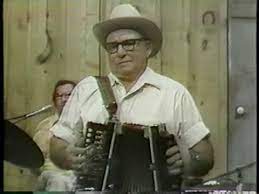
Austin Pitre- "Opelousas Waltz"


 Austin Pitre was born in 1918 in Ville Platte, in a time when house parties were fading, and dancehalls were replacing them. Austin grew up in this era and it had a heavy influence on his sound. 

Many landmark musicians lived nearby or played dances near where Austin grew up. Fiddlers Douglas Bellard and Leo Soileau were from the area and Amede Ardoin played around the area with Dennis McGee. The music and the life of hard work helped develop Austin's sound through the years.


The Pitre's were sharecroppers working for fifty cents a day. The boss wouldn't even pay his workers till Monday, so they wouldn't waste their money on the weekend. Despite the hard way of life, Austin's father gave him a accordion in hopes that he would learn to play with him at the house parties. Shortly afterwards, Austin learned to play and was playing alongside his father on the weekends.


Austin grew up having to work and supply extra money for his family, by working in the rice fields. He soon made himself a fiddle from a cigar box, spending his evenings watching the rice field water pumps and practicing his fiddle. Austin remembers:


"In those days it was all violins. Grandfather played the violin- they're all dead now... We had songs in the house, in the dancehalls.. we played violins together when we were young. We would play four violins together. Everybody sang in the fields then."


Austin later married and continued on with a hectic schedule, working in the fields or as a mechanic all day, while playing dances at night. During WWII he formed a string band and played for soldiers who came down from Fort Polk. Austin didn't have to go to war, as he was the only son left to help support his family.


After the war, Austin started up his band, The Evangeline Playboys. The group first recorded for J.D. Miller out of Crowley in the late forties, but for his second set of  records in the mid-fifties, he used the help of the Rhythmaires; a band led by Chuck Guillory out of Mamou.


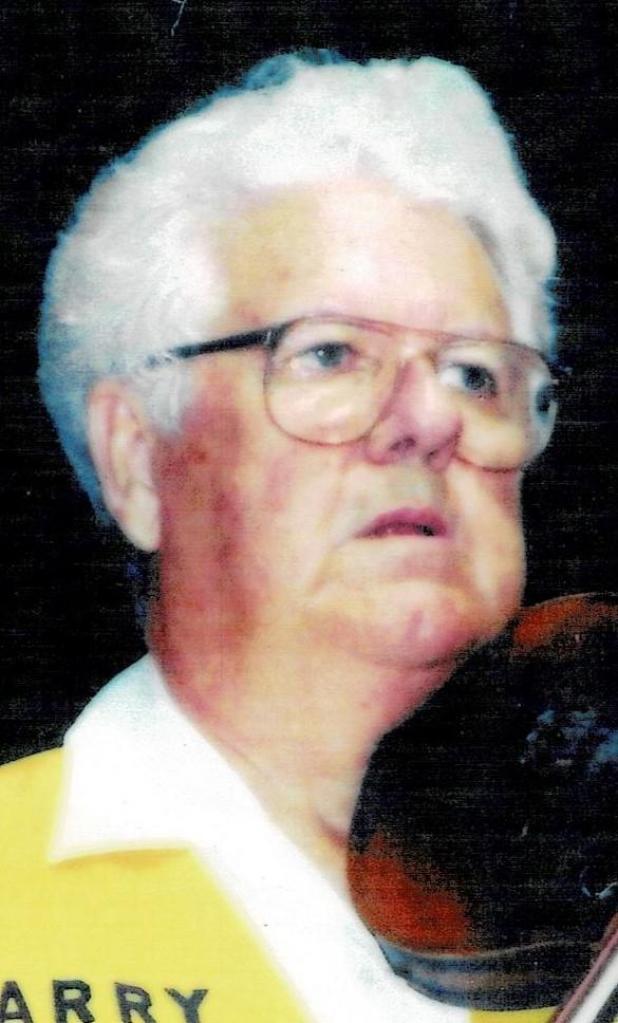
By the late fifties, Austin was working at Bordelon's Ford Garage with Harry LeFleur. Austin would ask Harry is his band, Harry and the Louisiana Aces would work with him to cut a record for Floyd Soileau's Swallow Records. The songs they recorded were well received, so they started working together on a regular basis. The first one they recorded was in October of 1959 and was called "Opelousas Waltz".


He', tit couer, comme moi, je vas faire

Quas, moi, tout seul, chere tit monde, a la maison?


He', tite fille, tu connais j'mennuie de toi, 

quo faire, toi t'es gone, chere tit monde,

maison si loin?


He', catin, quo' faire, toi, t'es comme ca?

Quais apres me quitter moi tout seul dans les miseres?


He', tit monde, tu cannais je m'ennuie de toi,

Ouais, cher tit coeur, viens me rejoindre avant de mourir


Opelousas, Louisiana is an old city and was once an Indian Trading Post. The word Opelousas comes from an old Indian work for "dark or murky water".


"Opelousas Waltz" was among the first records to be made at Floyd Soileau's studio in Ville Platte. In the 1950's and 1960's, Austin and his band played the large dancehall circuit of the time. The band played eight dances a week at the Silver Star, Evangeline Club, Hick's Wagon Wheel- a endless list. Austin also played for KVPI in Ville Platte's Man Store an for KSLO in Opelousas for many years.


Marc Savoy recalled Austin's playing:


" Austin was a very muscular man. He would play his accordion standing without a strap to support the accordion. He had a unusual sense of timing combined with a very intricate, fast technique."


After years of hard work and constant playing, Austin's health went down. Open heart surgery and serious back problems, were too much to handle and he died in 1981.


Resources

Ann Savoy- Cajun Music Vol. 2

Raymond Francois- Ye Yaille Chere


Session info

AND EVANGELINE PLAYBOYS (106, 108) V-2/acdn, Harry LaFleur (fdl), J Audrey ‘Cabrie’ Menier (v-1/st-g), Dickey Gill (g), Eston Bellow (d) Swallow Studio, Ville Platte LA: October 1959 S-6311

 Opelousas waltz-1 Swallow 106


Monday, October 4, 2021

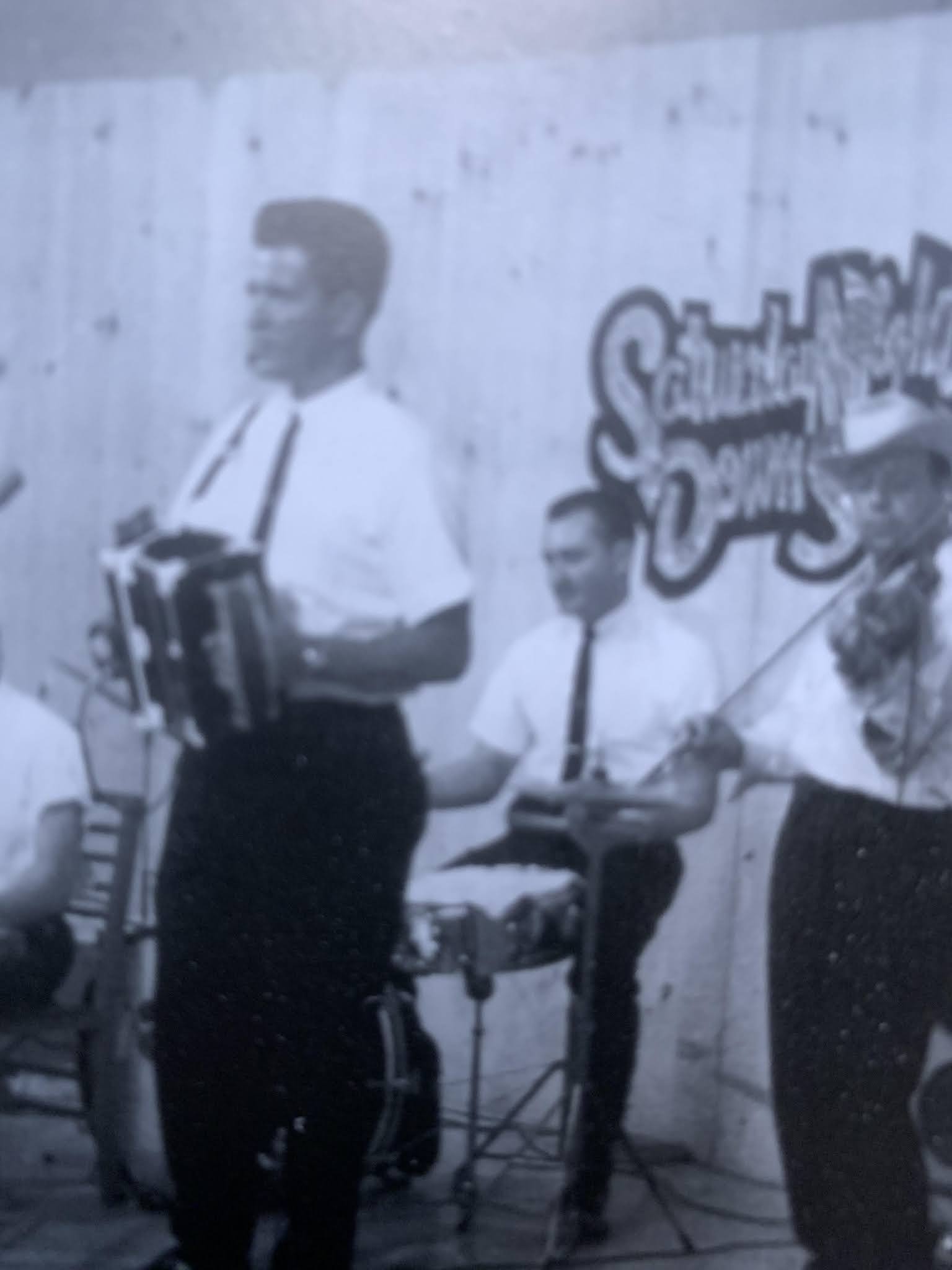
Aldus Roger and the Lafayette Playboys- "Marie"


Aldus Roger started playing the accordion at eight years old. His father had a accordion and Aldus would steal it and take it to the barn to play. By the age of twenty one he was good enough that he playing local dances, with Art Freme and Felix Richard. 


While he played the dancehalls at night, during the day he would work as a carpenter. He would make his mark when he formed his band, The Lafayette Playboys, in the late forties.


By the late fifties and early sixties, Aldus Roger was one of the most popular figures in the dancehall scene. Aldus was keen on his band being polished and disciplined. The band was always in demand and was known for their danceable sound. The band reached a new highlight when they had a weekly television show on KLFY in Lafayette.


The Lafayette Playboys recorded for various labels through out their career. In 1953, they recorded for the TNT label. In the mid fifties they recorded several sides for J.D. Miller's Feature label. They would record for Eddie Shuler and Floyd Soileau near the end of the decade.


In 1960, Aldus decided that he had served his time and wished to retire. The retirement would be short lived, for in 1962 Aldus was chosen by Roy Theriot to represent Louisiana at the Folklore Festival in Washington D.C. As a result of this, many friends persuaded him to reorganize his band.


Around 1963 Aldus and his band signed on with La Louisianne Records and recorded with them for the most part of the sixties. By 1968 he returned to recording for Floyd Soileau's Swallow Records. 

The band on this session differs from his previous band; Phillip Alleman is replaced by Isaac Miller on steel guitar. Vernon Bergeron plays drums with Louis Foreman and Tony Thibodeaux on fiddle. Rounding out on bass guitar is believed to be Beaver Leger.


By this time, Floyd had built his studio on East Main Street in Ville Platte when Aldus and his band came in to record a new single. Floyd had a multi story open studio at this time so he had the accordion and singer upstairs and the drummer downstairs.


Floyd recalls:


"..and Aldus was famous for drinking a few more beers than he should, and he was drunk and putting the empty beer can on the drummer and he was ruining the take, and finally I said, "Look, we got several great takes on this song, but while don't we do it one more time, and why don't y'all give me a longer finish on it before we end it." And with that in mind, I was able to fade it out and we were able to capture a very good cut on it. And it was a big record for us in Cajun music."


The record would be a moderate hit for Aldus, one many fans still sing and play.


Moi je peut pas t’oublier bebe
Tu sa-vais que moi j’taimer 
Tu sa-vais que moi j’taimer  catin depuis l’age de quartoze ans

Oh Marie catin garde donc ca t’as fait 
Garde donc t’apres m’quitter apres quitter ton pauvre vieux negre bebe 


Aldus slowly stopped putting out records after the Swallow single. He would go on to release two singles for the Acadian Artists label and then returned in the 1980's, releasing a single for Lanor Records. In a interview with Ann Savoy, Aldus was asked about the future of Cajun music:


"I don't know. But I know what's going on now. They don't play right. Belton Richard can play when he wants to, Milton Adams, the Touchets from Kaplan. I also like Reggie Matte, Nolan Cormier. They still got some that can play when they want to, but to me they still play too much rock and roll and country."


& LAFAYETTE PLAYBOYS


Swallow Studio, Ville Platte LA: 1968

S-45-1021 Be careful, you’re breaking 

my heart Swallow 10196

S-45-1022 Marie Swallow 10196


Resources


Interview with Floyd Soileau

Ann Savoy- Interview with Aldus in Cajun Music Vol 1

notes to La Louisianne 107

Conversation with Michael Dupuy

lyrics- Michael Dupuy

Sunday, May 2, 2021

Maurice Barzas- "Eunice Two Step".


Born in Mamou in 1909, Maurice Barzas picked up the accordion at a young age. He picked up the harmonica at first, but after hearing his uncle play the accordion; he switched his interests to it. Soon he was playing at house dances and clubs.


His first job performing was at the Evangeline Club in Ville Platte. Dewey Balfa started playing with him locally as well. But after Maurice got married, he didn't play dances as much. And during a time in the late 1930's and early 1940's, the accordion went down locally with string bands dominating the musical scene.


Maurice recalls J.B. Fuselier bringing back the accordion:


"It was J.B. who started having more accordion. At the old fais do-do's, he would play with a string band; but he would bring an accordion. He'd play dances just on the accordion. The people went crazy for that. It started there."


Maurice soon started playing the accordion again as well. He played locally in his area with his group; The Mamou Playboys. In 1962, he and his band recorded for Swallow Records in Ville Platte. Floyd remembered them in a interview I did with him:


"He's a great accordion player! He and his son,  they needed to make a record, so they came to see me and I recorded that in my studio."


The group returned in 1963 and recorded the "Eunice Two Step" with Maurice on the accordion, Allen West on the steel guitar, Vorrance Barzas on the drums and Roy Fontenot on the fiddle. Sadly this would be the last time the group recorded.


Judging by the four songs the group recorded, they were one of the best of this time. Floyd recalls they didn't have many songs and at this point on his label, he thought he had enough Cajun records by different bands.


As for Maurice and the Mamou Playboys, they started playing at Snook's in Ville Platte every Saturday night. The group continued this tradition for thirty five years.


Resources

Wade Falcon

Ann Savoy- Cajun Music Vol 2


Session info

Acdn, Roy Fontenot (v-1/fdl), Allen West (g), st-g, Vorrance Barzas (v-2/d)

Swallow Studio, Ville Platte LA: 1963

S 6380 Eunice two step-2 Sw 10141

Friday, February 19, 2021

Dorris Matte- "Mardi Gras Twist"


Dorris Matte was born to April 20, 1937 in the Pointe Noir area. Growing up he was inspired by Lawrence Walker and after seeing the legend play; he knew he wanted to play the accordion. A year or two later his father said he could afford a small accordion from the Sears Catalog. 


During the late 40's and early 50's, Dorris listened to Saturday afternoon radio shows of Cajun music. There he heard Cleveland Mire, Lawrence Walker and Aldus Roger.


In the late 50's he bought his first “little black” accordion from the local accordion maker, the late Mr. Sidney Brown, which encouraged him to learn more songs and fulfill his desire of playing and entertaining people.


He graduated high school in 1955 and married that same year. He moved to Lake Charles and started working for the Greater Lake Charles Water Company. There he started his band, The Lake Charles Rambling Aces. He began playing the dancehalls in 1958 making 10 to 15 dollars a night.


They recorded one session in 1962 for Swallow Records, but the following year they recorded "Mardi Gras Twist" at Floyd Soileau's studio. Joining Dorris on the recordings was Jay Stutes on steel guitar and Robert Thibodeaux on drums.


Floyd Soileau had leased some rooms in the Platte Theater. He went to a egg plant near Leesville and and bought some of the material to put on the wall in this space for a studio to help with the sound. In this studio Floyd only used 3 microphones. Floyd recalls:


"I could sell anywhere from 600 to 1500 copies just to my jukebox companies. So, when I was cutting a record in my studio I would tell the guys, 'Jukeboxes don't like anything that's longer than two-and-a-half minutes, let's cut it down a bit. Let's cut the playing time down so more records could be spun.' I was also telling them, 'You only got about fifteen seconds to sell your sound to a jukebox operator buyer. So, let's not waste it with a long instrumental. Let's get to the meat-and-potatoes right away in your song.' And so I was punching that along to produce something the operator loves and that was good for him, good for the artist, it was good for us, and it worked. We got all of our stuff on jukeboxes."  


The group would continue recording for Floyd's Swallow Records. They would record another session in 1963 and one more in 1966. They would record such songs as "No Good Woman" and "Passe par-tout".


During these years, he was invited by KPLC TV to play on a live show every Saturday afternoon, “Saturday Night Down South”. He also played live shows on Channel 3 in Lafayette, Louisiana and taped programs for the “Passe Par tout” program. He also played some teen dances at the old skating rink on Hodges Street. By the late 1970's Doris retired from playing.


Session info:

V/acdn, Jay Stutes (st-g), Robert Thibodeaux (d), remainder unknown

Swallow Studio, Ville Platte LA: 1963

S-6377 Mardi gras twist Swallow 10140


Resources

William Thibodeaux- Buggy Tracks

Wade Falcon

Ron Yule- Cajun Dance Hall Heyday

Interview with Floyd Soileau

Thursday, February 11, 2021

Andrew Cormier and the Rambling Aces- "Seventy Three Special"


Andrew Cormier was born in 1936 and raised in Church Point. Growing up, his father played the harmonica. On New Year's Eve he would go to his grandmother's house where they played the accordion, mandolin and guitar. He grew up working as a sharecropper on Roy Horecky's land. He grew tired of Roy and his slave driving ways and went to Texas.


He found a job driving trucks and delivering freight for his brother-in-law in Beaumont. While in Texas, his brother-in-law took him to a dance to see C.J. Broussard and the Band Busters. C.J. was playing the drums and Tan Benoit was playing the accordion. But later on C.J. and Tan got into a fight and Tan was fired, leaving Andrew to play the accordion.


Andrew went on to play at the 73 Club in Winnie where he met Huey Meaux, who was a barber at the time. At the time the original Rambling Aces consisted of Harry Trehan, Roland Ledet, Hillman Doucet, but Andrew soon took over the band. Rodney LeJeune soon joined the group after Hurricane Audrey pushed him into Texas to find work.


By 1958, the Rambling Aces in Winnie consisted of Andrew, Rodney LeJeune,Roland Ledet, Chat Deville, Aaron Higginbotham with Huey Meaux on drums. The group cut their first record for Floyd Soileau's Swallow Records. "The Seventy Three Special" and "Dans La Misere" was recorded at KPAC radio station in Port Arthur and sold a astounding 500 copies. 


Hey tite monde, moi je assis moi tout seul

Plus personne pour m'aimer moi tout seul

comment je vas faire

Oh malheureuse moi je assis sur l' borde mon lit 

Mon chaplet dans ma mains apres prier pour tu t'en viens


Oh tite fille moi je assis moi tout seule

Moi j' aimerais tu t' en viens une autre

fois avant mourir

Oh chere tite couer moi je assis moi

tout seul

Moi j'aimerais tu t’en viens nous rejoinde

au seventy-three


At this point Huey wasn't just the drummer for the group, he was acting as the manager for the group. He was the one who got in touch with Floyd Soileau at Swallow Records. Floyd recalls:


"Huey was a disc jockey in Texas and he played some of our music over there on that radio station. Then he decided he wanted to make a little bit of money as a booking agent for these bands, and so he started recording them at the radio station and he wanted a label to put it on, so he sent me the copies of the tape and said "If you want to put 'em out, you can put 'em out." So, I did."


Andrew would cut two more records for Swallow before joining Huey Meaux's Crazy Cajun label. Andrew and the Aces went on to set the standard for the Texas dancehall scene, playing at the Rodair Club for 28 years.


One night at the Rodair Club, Andrew's idol, Lawrence Walker, came to see Andrew play. Andrew remembers:


He called me 'Tit Boy. I asked him, "Nonc Lawrence, do you want to play a couple of songs?" He said, No, not now." So I played a couple songs and then Lawrence got on the bandstand and told me, "I'd never thought when you was a kid that you'd pick up on my style."


Cajun musician and historian, Michael Dupuy reports that there are two recorded versions of this song with different lyrics and instrumentation.


Resources

Thanks to Michael Dupuy for help and guidance

Lyrics- Michael Dupuy

John Broven- South to Louisiana

Ann Savoy- Cajun Music Vol 2.

photos-Ann Savoy: Cajun Music Vol 2

interview with Floyd Soileau


Session info

HUEY MEAUX - ANDREW CORMIER AND THE RAMBLING ACES

(Jin 104 and 106)

Andrew Cormier (v-2/acdn), Rodney LeJune (LeJeune) (v-1/d), Shaw-ee Deville

(fdl), Aaron Higginbotham, Roland Ledet (g), unknown g

KPAC Radio Station, Port Arthur TX: 1958

J8OW 7466 Seventy three special-2 Jin 104

Monday, November 16, 2020

Austin Pitre and the Evangeline Playboys- "Flum de Faire"


After Austin Pitre passed away in 1981, a box was found in his house of well used 78 rpm records by artists such as Amede Ardoin and Douglas Bellard. His love of the older music was evident from his music he chose to record through the years.


Austin was born in Ville Platte, surrounded by house parties. All of the area's musicians had a great effect on Austin growing up. His family were hard working sharecroppers making little money. His father was a fiddle player and his mother played the accordion. Soon Austin's father gave him a accordion in hopes that he would learn to play and join him at the local house parties.


Austin soon married and balanced the responsibility of working in the fields or as a mechanic all day then playing at dances at night. World War II came and Austin stayed home as he was the only son left to support his family. During this time the accordion popularity went down, Austin formed a string band to play for out of state soldiers. 


He first recorded for J.D. Miller with his group, The Evangeline Playboys. In the following years, Austin and the Playboys played many of the large dancehalls of the time. In 1957 he was recorded by Ed Manuel and the release was released on Big Mamou Records, which would be one of Floyd Soileau's first labels.


Harry LaFleur recalls working with Austin in the early 1950's. He would go watch Austin at the Dixie Club in Eunice and like his playing. At the time both Harry and Austin were working at Bordelon's Ford Garage. Austin asked Harry if he and his band would back him on a record.


Austin's first release in 1959 was on Floyd's Swallow Records. It was a double sided affair, paying tribute to two artists Austin listened to on those 78 rpm records. The A side was a cover of a Amede Ardoin song, but the B side became a hit.

The B side is a cover of a pre war Cajun song recorded by Douglas Bellard. Douglas was a black fiddler from Bellaire Cove, not far from Ville Platte. In 1929, he recorded "Mon Camon La Case Que Je Suis Cordane"; which was also known as "The Flames of Hell". The song is derived from another classic Creole song called "Adieu Rosa".

Austin and his new band recorded their version of the Bellard classic but used the title it was known for; "Flum De Faire" or Flames of Hell. The song is a Cajun classic that Austin made his own with the desperate plea plea to a loved one to "pray for me, save my soul, I am condemned to the flames of hell.."


Hey, maman

T'as tout l'temps dit

J'aurais pleurer

J'vas regret j'sus gone

C'est une belle tite fille

Elle etait si fine

J'sus parti la avec

Pour un bon temp

Quand moi, j'ai vu

J'sus condamné

J'sus condamné

Les flammes d'Enfer

Priez pour moi

Sauvez mon âme

Sauvez mon âme

Les flammes d'Enfer


Hey, maman

Priez pour moi

J'sus condamné

Les flammes d'Enfer

J'ai ité a la porte

Disait 'Tite Tante


Qui c'est qu'est la?

---C'est ton neveu

---Qui c'est tu veux??

Priez pour moi

J'sus condamné


Austin's session was recorded in Floyd's first studio next to the Platte Theatre. Floyd recalls the session:

"I used a delayed echo system that I  devised from using a voice of music recorder and that little space between the recorder head and playback head gave a reverb sound where you could split the mic and feed it back in to get as much echo as you wanted from it. I didn't like the sound at first and held back on releasing it. I finally released it and  it sold well on the jukeboxes and became a hit. My first million seller."


This first record was a hit for Austin and the Evangeline Playboys. Austin recorded extensively for Swallow Records between 1959 and 1971 recording many classic songs. He is largely responsible for keeping some of the old classics alive, many of which he had on the old 78 rpm records. His music is a prime example of the powerful dancehall sound of the time.


Session info

AND EVANGELINE PLAYBOYS

V-2/acdn, Harry LaFleur (fdl), J Audrey ‘Cabrie’ Menier (v-1/st-g), Dickey Gill (g),

Eston Bellow (d)

Swallow Studio, Ville Platte LA: October 1959

S-6312 Flum de faire (Flumes dans faires)

 (Flames of hell)-2 Sw 106


Resources

Conversations with Floyd Soileau

Wade Falcon- Early Cajun Music Blog

Broven- South to Louisiana

Ann Savoy- Liner notes to Arhoolie CD 452

lyrics- cajunlyrics.com


Sunday, November 1, 2020

Maurice Barzas and the Mamou Playboys- "Mamou Hot Step"


Maurice Barzas was born in Mamou in 1909. By age 12, he was playing the harmonica, but soon became interested in the accordion after hearing a uncle who played the instrument. After six months of practice on it, he was performing in public and was soon performing at dance halls.


He stopped playing in the late 1930's and early 1940's as the musical styles shifted to string band. With the accordion out of style during this time, Maurice went back to farming. It wouldn't be till after World War II when the Balfa Brothers approached him to pick back up the instrument to play in a band with them.


They soon joined together with Elise Deshotel's band. They recorded six songs for the Khoury's label, on which Maurice played accordion in the group. Also recording in the group was Atlas Fruge. These six songs recorded in 1951 would be the groups only output. During the next couple of years the Khoury's label faded and so did the interest of recording Cajun French music.


Maurice didn't like to travel, so he stayed close to the Mamou-Eunice-Ville Platte area. He started his own band and called them the Mamou Playboys. The group played at Snook's in Ville Platte every Saturday night; a gig they held for thirty-five years.


Floyd Soileau saw the lack of Cajun records being released during the late 1950's and decided to start his own label. With the rise of Swallow Records everyone was visiting Floyd and recording for his new label. Maurice and his group came as well.


In 1962, Maurice and his band, which included his son on drums, entered Floyd's studio in Ville Platte and recorded "Mamou Hot Step". On the recording with the Barzas' was Lee Manuel on fiddle and Allen West on guitar. The song was a instant classic and has been covered many times.


The group made one more record in 1963 and didn't record again. Over the years, live 
recordings from the group's shows at Snook's have been released.


Session info:

MAURICE BARZAS AND MAMOU PLAYBOYS 

 Acdn, Vorrance Barzas (v/d), poss. Lee Manuel (fdl) and Allen West (g), st-g 

Swallow Studio, Ville Platte LA: 1962 S 6358 Mamou hot step (instrumental) Swallow 130

Resources:

Many thanks to the help of Wade Falcon for all the info and photos for this article.

Wednesday, September 23, 2020

Nathan Abshire- "Lemonade Song"

                                                    
The 1960's were the beginning of a Cajun Cultural renaissance. Interest in more traditional Cajun music emerged after years of Rock, Pop and Country influence and one of the leaders was a accordion pioneer; Nathan Abshire.


Nathan's popularity rose in the late 1940's recording for the Khoury's label. The label slowly faded out of the Cajun music scene and the beginning of the 1960's found him recording for J.D. Miller. While Nathan and his new band made some great recordings on the label; Nathan wasn't happy with Miller's antics.

By 1963, he wanted out. Floyd Soileau had started up a label and was having success releasing traditional Cajun music. Nathan approached Floyd about recording for Swallow Records in the mid 1960's. Sadly, Nathan was still under contract with Miller at this time. Nathan ended up hiring a lawyer to get out of contract with Miller to record with Floyd.

Floyd Soileau recalls:

“I went to see him when he was working at the Basile dump, People were starting to cover ‘Pine Grove Blues’ and I researched the song at BMI but couldn’t find it. Khoury never registered the song but Nathan had recorded it as ‘Pinegrove Blues’ for J.D. Miller. He registered it at BMI, but wasn’t paying Nathan royalties. I told Nathan that if he signed a publishing contract with me, I could get him his writer’s royalties. I took him to a notary and he put his X on a contract. I cleared the song with BMI. J. D. contested it, but I had a contract. J.D. claimed his got burned in fire. But Dewey Balfa, who played on the Miller sessions, said nobody signed anything with J. D.”

So in the 1965, Nathan gave recording another try. He assembled a band who had recorded with him earlier in the decade. Dewey Balfa had recorded before as a Pine Grove Boy and had a good working relationship and friendship with Nathan. Their musical careers would continue till Nathan's death. Junior Benoit and Thomas Langley were also mainstays in Nathan's band at this point.

In 1966 they entered Floyd's and recorded a number of sides at the Swallow studio in Ville Platte. Nathan knew he needed to cut some 45's to help with local bookings, so at this session; Nathan and the Pine Grove Boys reworked a song Columbus Fruge had recorded in 1929 as "Point Clear Blues". 

Moi j'aime cousin et moi j'aime cousine mais j'aime mieux la cuisinière.  
Samedi, ce soir, moi courir au bal, je m'ai saoulé comme un gros cochon. 
Dimanche matin, il est tout manière malade,
Passez lui le verre à limonade.

L'hiver arrive, l'hiver arrive, ton p'tit nég a pas de couverte,
Samedi, ce soir, l'ai courir au bal, je m'ai saoulé comme un gros cochon,
Dimanche matin, j'ai tout manière malade, 
Passez moi le verre à limonade.

Moi j'aime cousin et moi j'aime cousine mais j'aime mieux la cuisinière.  
Samedi, ce soir, moi courir au bal, moi saoulé comme un gros cochon. 
Dimanche matin, il est tout manière malade,
Passez moi le verre à limonade.

Nathan had paid tribute to earlier pre war Cajun songs before. He had transformed the Segura  Brothers "Mosquito Ate My Sweetheart" into "La Valse De Holly Beach"and turned "Fe Fe Ponchaux" into the "Musical Five Special". Previously, Leroy Broussard had recorded a version of the "Lemonade Song" in 1957 for Goldband, but it seems Nathan's version is the most well known version and rightfully so.

From 1965 to 1972 Nathan recorded for Swallow Records with great success and it seems these recordings are what he's best remembered for. Nathan hit his stride as a recording artist in these years, turning out a string of remarkable records for the Swallow label.

Floyd Soileau remembers:

“That was when I had my first little studio. “We did some things with the Balfas and some with other musicians Nathan rounded up.  If you sold 1,500 copies of a Cajun single, then you jumped up and shouted ‘Hooray.’ Most of Nathan’s singles did 1,500 to 2,000, with a lot being sold to juke box operators."

With this new success, Nathan appeared with Dewey Balfa and The Balfa Brothers at the Newport Folk Festival in 1967. Along with Dewey , Nathan devoted much of his time in the 1960's and 70's to promoting Cajun music through appearances at festivals, colleges, and schools throughout the United States. Nathan stayed with Swallow until the mid-1970's when Soileau slowed down his recording activities.


AND HIS PINE GROVE BOYS (10170, 10173 & 10175)
V-1/acdn, Dewey Balfa, Dewey Balfa and Will Balfa (fdl), Darius LeBlanc, Junior
Benoit (g), Thomas Langley (d)
Swallow Studio, Ville Platte LA: 1966


Resources
Picturing the Cajun Revival: Swallow Records, Album Art, and Marketing
Early Cajun Music Blog
https://64parishes.org/entry/dewey-balfa

Friday, September 18, 2020

Vin Bruce- "Jole Blon"

                                               
Ervin "Vin" Bruce was born in Cut Off, Louisiana on April 25, 1932. His father, Levy played fiddle at local dances when Vin was growing up. Being from a musical family, Vin’s love for Cajun music grew and at the early age of 10, Vin learned how to play the guitar on his own. 


Although a shy country boy, Vin also began to sing. At 14 he began playing and singing in a local band, performing once a week on the radio in New Orleans. In 1946, Vin joined Dudley Bernard and “Southern Serenader's Band” and later went with Eugene Rodrigue and “The Louisiana Troubadours Band.”


On October 22, 1951, Bruce signed a recording contract with Columbia Records in Nashville, Tennessee. Just three years after the accordion made a comeback, Vin recorded such classics such as "Dans La Louisiane" and "Fille de la Ville", making him the first Cajun recording artist to work with Nashville musicians. Vin's Columbia sides brought that sound to the jukeboxes, airwaves and the 
Grand Ole Opry. Hank Williams was so endeared to Bruce's music that he invited him to play his public wedding ceremony at New Orleans' Municipal Auditorium. 

He recorded for the Columbia label from 1952 till 1954, and then in the mid-1950s; Vin's career took a downturn as Rock and Roll became popular. He played locally until he could no longer support himself by singing. To get by, he started to roughneck on offshore rigs.

In the early 1960's, Floyd Soileau was having success with his label Swallow Records. Many of Floyd's records were appearing on jukeboxes and playing a major role for independent record makers. 

Around this time, he opened Floyd's Record Shop in Ville Platte; bringing customers from the dance halls to his shop. The old Cajun legends came to Floyd one by one, hoping to achieve new life and endurance for their music. One of those artists was Vin Bruce.

It was 1961 when Bruce signed a recording contract with Swallow Records. By now, Floyd had developed his production company, Flat Town Music, and had been able to create a recording studio of his own in the back of his shop. It was for Swallow Records that Vin Bruce recorded his next hit single, “Jole Blon.” 

The original version of the song was recorded in 1929 by the Breaux Brothers called "Ma Blonde Est Partie". In 1936 the song appeared with the title "Jole Blonde" for the first time on two records, when the Hackberry Ramblers and Miller's Merrymakers recorded it in New Orleans. Then in 1946 the song gained success again from Harry Choates.

In the 1960’s Doc Guidry began playing and recording with Vin Bruce on Floyd Soileau’s Swallow Label. Their first record together was in 1961, and was widely successful. But together their recording of "Jole Blon" was a a hit all over again. The key ingredient to the record's success was Doc Guidry’s phenomenal fiddling. As for Vin, he continued recording for Swallow until the early 1970's.

Session info
Vin Bruce (V/g), Oran ‘Doc’ Guidry, Wilbert Robichaux (fdl), Harry Anselmi (st-g), Luke
Charpentier, Ebdon Barrios (g), D J Collins (b-g), Mack Cheraimie (d)
 1962
S-6356 Jole blon Swallow 129


Resources
https://www.flattownmusic.com/artist/vin-bruce/
Jessica Dauterive- Picturing the Cajun Revival: Swallow Records, Album Art, and Marketing
http://www.ponderosastomp.com/music_more.php/259/Vin+Bruce
Early Cajun Music Blog

Monday, September 7, 2020

Dewey Balfa and his Musical Brothers- "Valse De Balfa"

                            
When talking about the revival of traditional Cajun music, it's hard not to mention Dewey Balfa. Together with his brothers, Dewey helped introduced the sound of traditional Cajun music to people around the world.

During World War II, Dewey  left home to work in a Texas shipyard followed by a stint in the Merchant Marines. He played Texas swing, maintaining a heavy swing influence. It was here, being away from home where he felt the missing connection with his cultural music. In 1948, he returned to Louisiana and formed the Musical Brothers, a popular string dance band, with brothers Harry, Will and Rodney. By then Dewey had developed his own sound with his accurate, flowing style and was often requested to gig with other musicians.

By the 1950's, Dewey was a in demand musician. He began a lifelong association with Nathan Abshire. But it wouldn't be until the 1960's that Dewey would make a recording career with Floyd Soileau and Swallow Records. In 1963, Dewey approached Floyd about recording traditional Cajun music on his label.

At the first session for Swallow Records, Dewey and his brothers recorded a number of traditional songs. The second record they released was a number written by his brother, Will called "Valse De Balfa".

Quand j´ai parti de la maison,
J´avais fait mon idée,
J´étais parti pour te chercher, cher,
Où mourir au bout de mon sang.

Quand j´ai arrivé à ta maison,
J´en ai trouvé -z-un autre avec toi,
Ça, ça a cassé mon coeur, cher,
J´aimerais mieux mourir que voir ça.

Si j´aurais cinq jours dans ma vie,
J´en donnerais trois dans les cinq,
Pour passer las deux autres avec toi,
J´amerais mourir tes dans tes bras.

Like many traditional Cajun songs, the song is a haunting tale of one's love for another and his agony of seeing her with someone else. The song has had a lasting influence  and is still played by many to this day.

Louis Michot and the Lost Bayou Ramblers also recorded the song recently. Louis describes the song:


"La Valse de Balfa is one of those songs that draws anybody in who hears it. The pain and emotion is palpable, and the lyrics go straight to the heart."


 Later in 1964, he played at the Newport Folk Festival and played in front of 17,000 people. He continued recording traditional Cajun music for Floyd and others through the 1960's and 1970's. The Balfa Brothers played together until 1978, when Dewey’s brothers Will and Rodney were killed in an automobile accident. Dewey continued to play, and Rodney Balfa’s son Tony joined the group.


DEWEY BALFA AND HIS MUSICAL BROTHERS (10172, 10185)
Dewey Balfa (v/fdl), Will Balfa (v/fdl), Rodney Balfa (v,g), Harry
Balfa (g), Burke Balfa (triangle)
Swallow Studio, Ville Platte, LA; 1964

Valse de Balfa-1 Swallow 10185,

Resources:
Early Cajun Music Blog
with thanks to Louis Michot
Folkways.com
Lyrics-cajunlyrics.com

Monday, June 8, 2020

Adam Hebert and the Country Playboys- "Le Moulin"

Adam Hebert was born near Church Point on August 23, 1923 and grew up listening to traditional Cajun and Country music. By the fourth grade he was singing Jimmie Rodgers songs for his classmates. 

He built his first
fiddle out of a old chocolate box and screen wire. His bow was strung with horsehair from the tail of the family mare. He soon got a Montgomery Ward fiddle and began playing with Felton Carriere. Together they played house dances and local dance halls. 


Around this time, he joined Alphee Bergeron and played in the Veteran Playboys. They recorded on record for JD Miller's Fais Do Do label in 1948. But it was in the mid- 1950's when he formed his own group, The Country Playboys. The group consisted of Cleby Richard, Dirk Richard, Wilfred Labie, Willard Matte and John "Boy" Miller. Their music represents the classic Cajun dance hall style of the 1950's and 1960's with country and early rock influences.

Hebert’s contributions kept things moving along, beginning with his first hit “Blues de Dix Ans” in 1958 through his last sides waxed in ’67. During that nine-year run, Hebert was responsible for such cherished tunes as “Pour la Dernière Fois,” “Cette-là moi j’aime,” “J’aimerais Connaitre” and the exhilarating “La Pointe Aux Pins.” While Hebert possessed one of the most piercing high lonesome voices ever heard in all of roots music, he never failed to surround himself with quality musicians.

Adam and his band recorded "Le Moulin" in 1961 at the Swallow Studio in Ville Platte. They would continue recording a string of releases for Soileau's label until 1976. Adam Hebert, at one time, owned and operated Rose's Cafe along with his wife during the early 1970's and later started a career in Insurance Sales retiring from Security Industrial Insurance after 25 years of employment. In 2003 the Fesival de Musique Acadienne at Festivals Acadiens in Lafayette, Louisiana was dedicated to him and his lifelong contribution Other awards include, The CFMA Chapitre de Lafayette honored on March 17, 2007 at Acadian Village in Lafayette.


Resources
John Broven- South to Louisiana
Early Cajun Music Blog